
House Prices in Belgium 2027: Cheapest & Most Expensive Cities
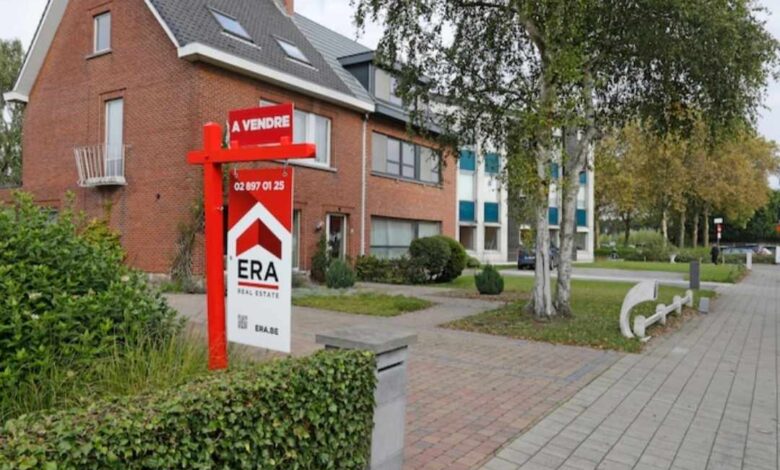
House prices in Belgium have continued to change as buyers adjust to higher borrowing costs, inflation, energy requirements and changing housing demand.
For anyone planning to buy a home in Belgium in 2027, one of the biggest questions is where property is most affordable and which cities and areas have the highest prices.
The latest official figures show major differences across Belgium. Brussels remains the country’s most expensive region, while Wallonia has the lowest median house prices. Within individual regions, however, the difference can be much larger from one city or municipality to another.
The latest available figures do not yet provide a final nationwide average for 2027. Instead, the most recent 2026 data gives buyers a useful picture of the market heading into 2027. Statbel’s first-quarter 2026 figures showed a Belgian median price of 285,000 euros for attached and semi-detached houses, 405,000 euros for detached houses and 257,000 euros for apartments.
Are house prices rising in Belgium?
The Belgian housing market has returned to price growth after the slowdown seen in previous years.
The latest ERA Barometer found that house prices in Flanders increased by 3.7 percent in 2025, while apartment prices increased by 4.1 percent. ERA described the Flemish market as more stable after a period of unusually strong price movements.
The Walloon market also recorded a stronger increase. According to ERA, house prices in Wallonia increased by 5.7 percent in 2025, compared with increases of 1.9 percent in 2024 and 2.3 percent in 2023.
This does not mean that every Belgian city experienced the same increase. Location remains one of the biggest factors affecting property prices.
How much does a home cost in Belgium?
According to Statbel, the median price in Belgium in the first quarter of 2026 was:
- 285,000 euros for attached and semi-detached houses
- 405,000 euros for detached houses
- 257,000 euros for apartments
The median is particularly useful because it represents the middle of the market: half of the properties sold for less and half for more.
There were also major regional differences.
In Wallonia, the median price was 200,000 euros for an attached or semi-detached house and 335,000 euros for a detached house.
In Flanders, the corresponding figures were 321,318 euros and 450,000 euros.
Brussels was considerably more expensive, with a median price of 543,500 euros for attached and semi-detached houses and 1,487,500 euros for detached houses.
Brussels remains the most expensive region
Brussels continues to stand apart from the rest of the Belgian housing market. The Brussels-Capital Region had the highest median property prices for all major housing categories in the first quarter of 2026.
For apartments, the median price in Brussels was 310,000 euros. For attached and semi-detached houses, it reached 543,500 euros.
Detached houses were even more expensive, with a median price of 1.49 million euros.
Prices also vary significantly between Brussels municipalities.
For houses, Ixelles had a median price of 815,000 euros in the first half of 2026, followed by Woluwe-Saint-Pierre at 750,000 euros and Uccle at 745,000 euros.
At the lower end, Molenbeek-Saint-Jean had a median house price of 318,000 euros, followed by Anderlecht at 356,500 euros.
Flanders: Leuven remains one of the most expensive cities
Flanders has some of Belgium’s most expensive housing markets, particularly in and around the major cities.
The ERA Barometer has consistently identified Leuven as the most expensive Flemish central city.
The latest detailed ERA comparison found that a similar home in Leuven cost around 11 percent more than in Ghent or Antwerp. At the more affordable end of the Flemish central-city market were Roeselare, Genk and Kortrijk.
The difference between cities is important for buyers who are flexible about where they live.
Someone looking for a home in Leuven may face a very different budget from someone searching in Roeselare, Genk or Kortrijk.
Antwerp, Ghent and Leuven
Antwerp and Ghent are among Belgium’s largest cities and remain important property markets. Leuven is particularly expensive because of strong demand and its proximity to Brussels, as well as its university and employment base.
The latest ERA data showed that Leuven remained above Antwerp and Ghent when comparing similar homes.
For buyers, this means that moving only a relatively short distance away from the most expensive city centers can make a substantial difference to the price of a home.
What are the cheapest cities to buy a home in Belgium?
There is no single nationwide ranking that applies to every type of property. Prices depend on whether you are buying a house or an apartment, and the cheapest municipality for one property type may not be the cheapest for another.
In Flanders, ERA has identified Roeselare, Genk and Kortrijk among the most affordable central cities.
In Wallonia, several cities and municipalities have much lower property prices than Brussels and the wealthier areas surrounding the capital.
Statbel’s latest data provides particularly clear examples for apartments.
In the first half of 2026, the median apartment price was:
- Charleroi: 125,000 euros
- La Louvière: 145,500 euros
- Herstal: 149,000 euros
- Verviers: 165,000 euros
- Seraing: 165,000 euros
- Mons: 170,000 euros
- Tournai: 170,000 euros
- Liège: 185,000 euros
These figures show why Wallonia remains an important option for buyers looking for lower property prices.
Charleroi has some of Belgium’s lowest apartment prices
Charleroi stands out in the latest Statbel figures. The median price of an apartment in Charleroi was 125,000 euros in the first half of 2026.
That was considerably below the median apartment price in Liège, which was 185,000 euros, and Namur, where the median reached 215,000 euros.
Charleroi is therefore an important city to consider when comparing property prices across Belgium.
The lower purchase prices do not mean that every property is inexpensive. Prices can still vary considerably depending on the neighborhood, condition, size and energy performance of the property.
Liège property prices
Liège is another major Walloon city where property prices remain below those found in Brussels and many parts of Flanders.
In the first half of 2026, the median apartment price in Liège was 185,000 euros.
The median price for attached and semi-detached houses in the province of Liège was 210,000 euros, while detached houses had a median price of 330,000 euros.
For buyers interested in a major Belgian city without paying Brussels-level prices, Liège offers a very different housing market.
Namur property prices
Namur, the capital of Wallonia, is more expensive than several other major Walloon cities. The median apartment price in Namur reached 215,000 euros in the first half of 2026.
The median price for an attached or semi-detached house in the province of Namur was 235,000 euros, while detached houses had a median price of 300,000 euros.
Namur therefore sits between some of Wallonia’s cheaper urban markets and the more expensive areas closer to Brussels.
Mons and Tournai
Mons and Tournai also remain relatively affordable compared with Brussels and the most expensive parts of Belgium.
The median apartment price in both Mons and Tournai was 170,000 euros in the first half of 2026. For comparison, Liège was at 185,000 euros and Namur at 215,000 euros.
These differences can be important for first-time buyers who are more focused on affordability than on living in the most expensive urban markets.
The most expensive places to buy a home in Wallonia
Wallonia is generally cheaper than Flanders and Brussels, but some municipalities have very high property prices.
The most expensive municipality for houses in Wallonia in the first half of 2026 was Lasne, where the median house price reached 740,000 euros.
Waterloo and Chaumont-Gistoux followed at 560,000 euros. Rixensart and La Hulpe each recorded a median house price of 500,000 euros.
These areas are located in or near Walloon Brabant and are strongly influenced by their proximity to Brussels.
The cheapest places to buy a house in Wallonia
At the other end of the market, several Walloon municipalities had much lower house prices.
In the first half of 2026, the median house price was:
- Hastière: 110,000 euros
- Erquelinnes: 130,000 euros
- Tellin: 139,000 euros
- Quaregnon: 140,000 euros
- Viroinval: 141,300 euros
- Froidchapelle: 142,000 euros
- Cerfontaine: 144,000 euros
- Frameries: 145,000 euros
- Quiévrain: 146,250 euros
- Colfontaine: 147,000 euros
These are municipality-level figures rather than prices for entire cities or regions.
What about apartments?
Apartments are generally less expensive than detached houses, but the location can make a huge difference.
Across Belgium, the median apartment price was 257,000 euros in the first quarter of 2026.
The cheapest apartments in the latest Walloon data were found in Châtelet and Charleroi, while some municipalities close to Brussels had much higher prices.
Waterloo had a median apartment price of 365,000 euros, while Rixensart reached 320,000 euros and Genappe 302,500 euros.
Energy efficiency is becoming more important
Energy performance has become one of the most important factors in the Belgian housing market, particularly in Flanders.
The ERA Barometer found that energy-efficient homes continued to perform differently from properties with poor EPC ratings.
In 2025, Flemish house prices increased by 3.7 percent overall. The market continued to reflect the growing importance of energy performance and the cost of renovating older homes.
Earlier ERA data showed just how large the difference can become. In 2024, homes with EPC A or B increased in price by 4.8 percent, while homes with EPC E or F fell by 1.2 percent. An otherwise similar home with an EPC A rating sold for 26 percent more than one with an EPC D rating, while an EPC F home sold for 13 percent less than an equivalent D-rated property.
For someone buying a home in 2027, the energy rating should therefore be considered alongside location, size and purchase price.
Why location matters so much in Belgium?
Belgium is a relatively small country, but its housing market is highly regional. Brussels has some of the highest property prices in the country.
Flanders includes expensive markets such as Leuven and Flemish Brabant, but also more affordable cities such as Roeselare, Genk and Kortrijk.
Wallonia has some of the country’s lowest property prices, particularly in areas farther from Brussels. At the same time, municipalities such as Lasne, Waterloo and Wavre can be very expensive.
This means that the question “How much does a house cost in Belgium?” does not have one simple answer.
What can buyers expect in 2027?
There is not yet an official nationwide 2027 house-price figure. The latest available data shows that the Belgian property market entered the period leading into 2027 with significant regional differences and renewed price growth in several markets.
In Flanders, ERA reported moderate growth in 2025, while Wallonia recorded a stronger increase. Official Statbel data from 2026 also shows substantial differences between regions and municipalities.
For buyers planning to purchase in 2027, the most important factors to watch will include mortgage rates, inflation, energy efficiency, renovation costs and the supply of homes for sale.
Cheapest and most expensive property markets in Belgium
Belgium’s housing market is far from uniform. For houses, Brussels and wealthy municipalities around the capital are among the most expensive areas.
In Flanders, Leuven remains one of the country’s most expensive central cities, while Roeselare, Genk and Kortrijk have historically been among the more affordable Flemish central cities.
In Wallonia, municipalities such as Lasne and Waterloo are among the most expensive, while places such as Hastière and Erquelinnes have much lower median house prices.
For apartments, Charleroi and Châtelet are among the lowest-priced markets in the latest Walloon data, while Waterloo and several municipalities around Brussels are substantially more expensive.
For anyone planning to buy a home in Belgium in 2027, comparing individual cities and municipalities is therefore much more useful than relying on a single national average.