
Private Dutch Lessons… Meevallen vs Tegen Vallen
Learning Dutch fluently can be difficult, but it can become easier than you expect. In this lesson, we will explain the difference between “meevallen” and “tegenvallen” in Dutch with simple examples.
What Do Het Valt Mee and Het Valt Tegen Mean?
Here are some useful Dutch sentences that show how these expressions are used in everyday situations.
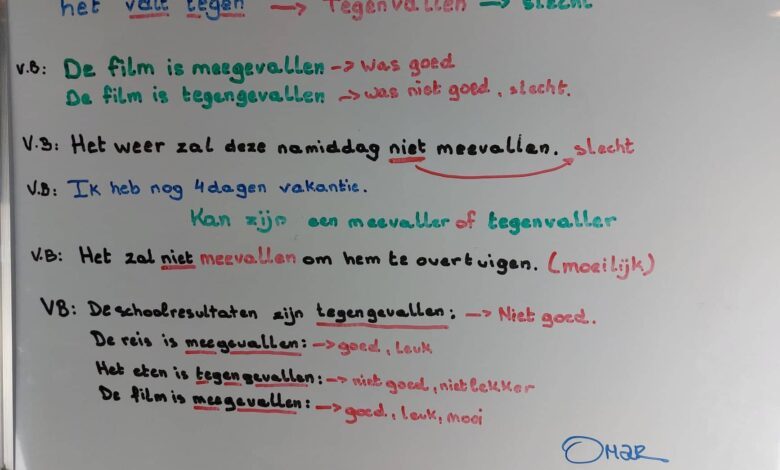
De film is meegevallen
The movie was better than I expected. For example, I expected the movie to be bad, but after watching it, I thought it was actually good.
De film is tegengevallen
The movie was worse than I expected. For example, I expected the movie to be good, but it turned out to be disappointing.
Het weer zal deze namiddag niet meevallen
The weather will probably not be very good this afternoon.
If you still have four days of vacation and that is what you expected, you can say “het valt mee.” However, if you expected to have four days but actually only have two or three days, you can say “het valt tegen.”
Het zal niet meevallen om hem te overtuigen
It will be difficult to convince him.
De schoolresultaten zijn tegengevallen
The school results were not as good as expected.
De reis is meegevallen
The trip went well and was better than expected.
Het eten is tegengevallen
The food was not very good or was not as tasty as expected.
De film is meegevallen
The movie was good, enjoyable, or better than expected.
Summary: Meevallen and Tegen Vallen
“Het valt mee” means “het was beter dan je dacht,” which means something was better than you expected.
“Het valt tegen” means “niet zo goed, mooi of leuk zijn als je had gedacht,” which means something was not as good, beautiful, or enjoyable as you expected.
Understanding the difference between “meevallen” and “tegenvallen” is useful for everyday Dutch because these expressions are often used when the result of something is different from what you expected. A Dutch language tutor can also help you practice these expressions and understand when to use them naturally.