
Year-End Bonus in Belgium: Who Gets It in 2026?
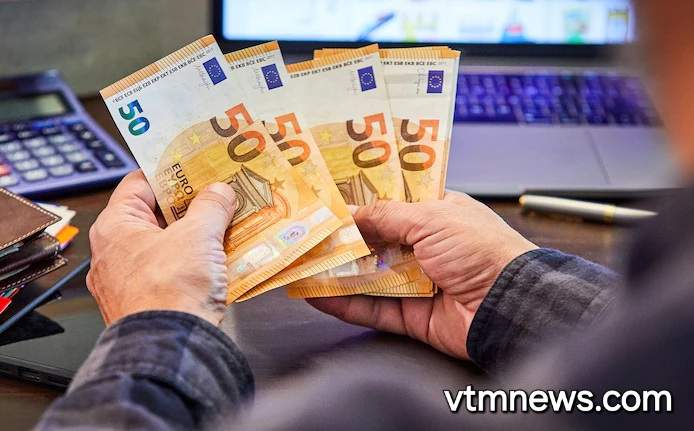
Many employees in Belgium receive extra money at the end of the year. This payment is commonly called the “year-end bonus” or “end-of-year bonus.” In French, it is known as a “prime de fin d’année,” while the Dutch term is “eindejaarspremie.”
You may also hear people call it a “13th month.” However, this is not an official name for one single payment in Belgium, and not every employee receives an extra full month’s salary.
The rules depend mainly on your sector, joint committee, employment contract and collective labor agreements.
Is a Year-End Bonus Mandatory in Belgium?
There is no general Belgian law that gives every employee a year-end bonus.
Your right to the payment usually comes from one of the following:
- A collective labor agreement for your sector
- A collective agreement within your company
- Your employment contract
- Company rules
- An established and binding company practice
This is important because employees in different sectors can have completely different rules.
For example, one sector may provide a bonus close to one month’s salary, while another may calculate it as a percentage of annual wages.
Who Is Entitled to a Year-End Bonus?
Whether you receive a year-end bonus depends on the rules that apply to your job.
One of the most important things to find is your joint committee (commission paritaire or paritair comité). Belgian employees are assigned to a joint committee based on the sector in which they work.
The joint committee can determine:
- Who qualifies for the bonus
- How much the employee receives
- The reference period
- The payment date
- Minimum seniority requirements
- What happens when an employee leaves the company
This means that simply having a full-time job in Belgium does not automatically guarantee a year-end bonus.
How Is the Year-End Bonus Calculated?
There is no single formula for the whole country.
Depending on your sector, the bonus may be calculated as:
- A percentage of your gross wages
- A percentage of your annual salary
- A fixed amount
- A payment based on your normal monthly salary
Some employees may therefore receive an amount close to one month’s gross salary, but this should not be assumed for every worker.
The calculation can also be affected by the number of days or hours worked during the reference period.
What If You Did Not Work the Whole Year?
You do not necessarily have to work for the entire year to receive a year-end bonus. Some sector rules allow employees to receive a proportional payment based on the period they worked.
However, this depends on the applicable collective agreement. Some sectors also have minimum seniority requirements or specific rules concerning absences.
For this reason, someone who started working in the middle of the year may still qualify, but the amount could be lower than that of someone who worked throughout the full reference period.
What Happens If You Change Jobs?
Changing jobs does not automatically mean you lose your year-end bonus. The rules can be different depending on your sector and the reason your employment ended.
In some sectors, an employee who leaves during the year can receive a proportional year-end bonus. In other cases, specific conditions must be met.
This is particularly important if you resign, are dismissed, retire or move to another employer near the end of the year.
Before assuming that you will receive or lose the bonus, check the collective labor agreement that applies to your job.
Do Temporary Workers Get a Year-End Bonus?
Yes. Temporary workers, also known as interim workers, can qualify for a year-end bonus in Belgium.
For the 2026 year-end bonus, the Social Fund for Temporary Workers uses a reference period running from July 1, 2025, to June 30, 2026.
Under the standard five-day working week, an interim worker generally needs at least **65 days or 494 hours during this period to qualify.
For qualifying temporary workers, the gross bonus is 8.33% of the gross wages earned as a temporary worker during the reference period**.
The Social Fund states that the 2026 year-end bonus is paid in December 2026.
There are additional rules for people working a six-day week and for temporary workers who move directly from temporary employment to a permanent job with the same company.
Is the Year-End Bonus Taxed?
Yes. A year-end bonus is not simply added to your bank account without deductions.
It is subject to social security contributions and tax withholding. Because it is treated as an exceptional payment for payroll purposes, the withholding rate can be higher than the rate you see on your normal monthly salary.
For employees in Belgium, the standard employee social security contribution is 13.07%.
The tax withholding on exceptional payments depends on your annual remuneration. At higher income levels, the withholding rate can reach 53.50%.
This does not mean that every employee loses 53.50% of the bonus. The actual amount withheld depends on your income and personal tax situation.
It is also important to remember that payroll withholding is not necessarily the same as your final tax bill after your annual tax return.
When Is the Year-End Bonus Paid?
Many employees receive their year-end bonus in December, but there is no single payment date for every worker in Belgium.
The payment date depends on the sector and the rules that apply to the employee.
Temporary workers who qualify for the 2026 bonus, for example, receive their payment through the Social Fund for Temporary Workers in December 2026.
Other workers may receive their bonus directly from their employer or through another sector-specific fund.
How Can You Check If You Will Get a Bonus?
If you are not sure whether you qualify, start by checking your joint committee number.
You can usually find it on your payslip or employment documents.
Then check:
1. Your employment contract
2. Your company’s work regulations
3. The collective agreement for your sector
4. Your recent payslips
5. Your union or relevant social fund
If you work through an interim agency, check the Social Fund for Temporary Workers and the information provided by your agency.
Year-End Bonus vs. 13th Month
The terms can be confusing. A “13th month” usually means an extra payment that is roughly equal to one month’s salary. But in Belgium, the official concept is generally a year-end bonus, and the amount is not necessarily equal to your monthly salary.
For some employees, the bonus may be close to a full month’s pay. For others, it may be a percentage of wages or a fixed amount.
That is why it is better to check the rules for your specific sector rather than assuming that everyone in Belgium receives the same payment.
The year-end bonus is an important extra payment for many employees in Belgium, but it is not a universal benefit automatically paid to everyone.
The amount, eligibility requirements and payment date depend largely on your sector and joint committee.
If you want to know whether you will receive a year-end bonus in 2026, check your joint committee first. It can tell you far more than simply looking at your job title.
And while many people casually call the payment a “13th month,” it does not necessarily mean you will receive an extra full month’s salary.