
Dutch Language Tutor… Wil, Wou, Wilde
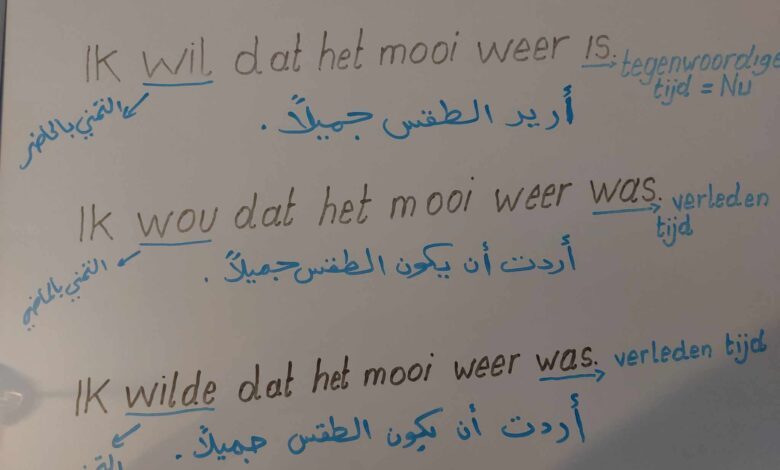
The Dutch language has many expressions that show subtle differences in time and meaning when talking about events, wishes, and feelings. In this guide, we will look at three Dutch sentences that use the verb willen, which means “to want,” while focusing on how the tense and structure change the meaning of each sentence.
1. Ik wil dat het mooi weer is
I want the weather to be nice.
Time: Present tense.
Structure: This sentence expresses a direct and current wish. The verb wil is the present-tense form of willen and shows a clear, present desire for the weather to be nice.
Meaning: The sentence expresses an immediate and personal feeling and is often used when talking about everyday wishes or hopes.
2. Ik wou dat het mooi weer was
I wish the weather were nice.
Time: Past tense.
Structure: Here, the verb wou is a simple past form of willen and is used to express a wish or desire about a situation that is not true or did not happen as hoped. The verb was at the end of the sentence shows the past form of zijn, meaning “to be.”
Meaning: This sentence can express regret, disappointment, or a wish for something to be different from reality.
3. Ik wilde dat het mooi weer was
I wanted the weather to be nice.
Time: Past tense, with a focus on a past desire.
Structure: The verb wilde is another past form of willen and is often used when talking about a desire that existed during a period in the past.
Meaning: This sentence describes a past desire, but it is generally less focused on regret or disappointment than the second sentence.
Comparing the Three Sentences
1. Ik wil dat het mooi weer is is in the present tense, showing a current wish: wil + is.
2. Ik wou dat het mooi weer was is a past form used to express an unreal or unfulfilled wish: wou + was.
3. Ik wilde dat het mooi weer was is also in the past and describes a desire that existed in the past: wilde + was.
Learn Dutch With a Dutch Language Tutor
These examples show how Dutch verbs and sentence structures can express small but important differences in time, wishes, regret, and hope. Understanding the difference between wil, wou, and wilde can make your Dutch sound more natural and help you understand what native speakers mean in different situations.
If you are learning Dutch, practicing these sentence patterns with a Dutch language tutor can help you understand when to use each form and improve your speaking skills through real examples.
Read Also: Dutch Language Tutor Job Interview Guide.