Record migrant arrivals in Spain’s Canary Islands
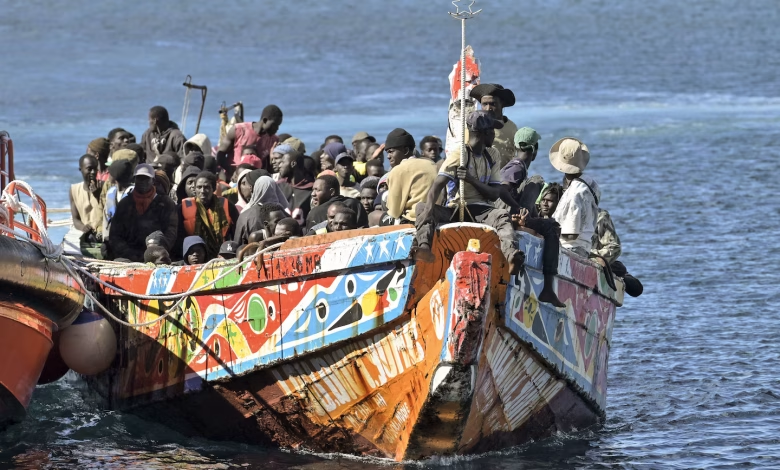
Nearly 3,900 migrants arrived in Spain’s Canary Islands over three days, putting local reception centres under severe pressure. The island of El Hierro is struggling to accommodate the growing number of people arriving by boat.
Spain has recorded an unprecedented number of migrant arrivals in the Canary Islands, with rescue teams working around the clock to deal with the sudden increase.
On Saturday, Spanish authorities rescued 1,580 migrants, the highest number recorded in a single day on this migration route in more than 30 years.
The previous record was 1,461 arrivals, set on 7 November 2020.
The arrivals continued on Sunday, when another 1,467 people reached the islands in nine boats. Eight boats arrived on El Hierro and one on Tenerife.
Nearly 3,900 people in three days
The latest figures show that 843 migrants arrived on Friday, followed by 1,580 on Saturday and 1,467 on Sunday.
In total, 3,890 people reached the Canary Islands in just three days, travelling in 31 boats.
Most came from Senegal, Gambia and other West African countries. Some had spent between four and seven days at sea in overcrowded wooden boats.
One boat was carrying around 240 people, including 36 children. Among those rescued on Saturday were at least 120 women and 173 minors.
Spanish coastguard and Guardia Civil teams carried out repeated rescue operations, bringing people ashore on El Hierro, Tenerife and Gran Canaria.
Reception centres reach capacity
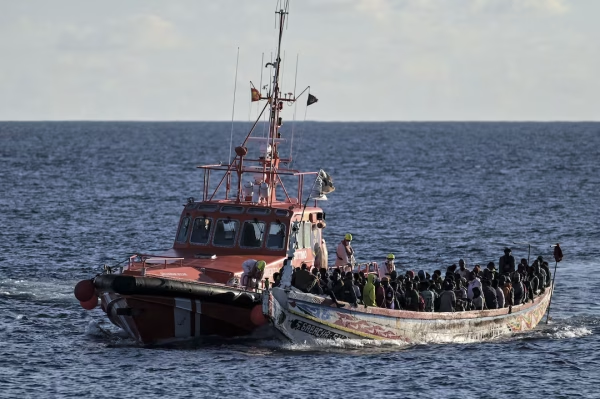
El Hierro is facing the greatest pressure. The small island, located in the west of the Canary Islands, has struggled to find enough space for the new arrivals.
On Sunday evening, around 870 migrants had to spend the night at the ports of La Restinga and La Estaca because reception facilities elsewhere on the island were full.
The situation is also putting pressure on local emergency services and healthcare facilities. Several people were taken to hospital after arriving.
Canary Islands call for help
Fernando Clavijo, president of the Canary Islands, has called on the Spanish government to provide urgent support.
He says the islands cannot manage the situation alone and is asking for more staff, additional medical assistance and faster transfers of migrants to mainland Spain.
Spanish minister Ángel Víctor Torres visited the port of La Restinga on Sunday. He said around 27,000 migrants had reached the Canary Islands so far this year, including approximately 17,000 on El Hierro.
The Spanish government has promised 15.8 million euros in emergency funding to improve reception facilities and help transfer migrants to mainland Spain. Additional rescue equipment and support for emergency teams are also planned.
Why are arrivals increasing?
The number of migrant arrivals had fallen during the first half of the year, but the trend has changed since October.
Several factors may explain the increase. Autumn weather conditions in the Atlantic are often more favourable for crossing the sea. Economic difficulties and political uncertainty in countries such as Senegal are also pushing some people to seek a future in Europe.
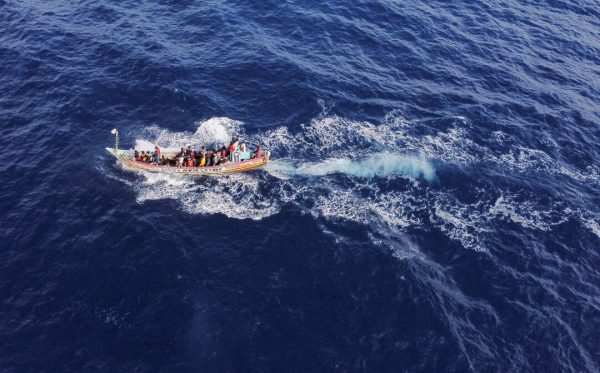
However, the journey remains extremely dangerous. Many migrants travel hundreds of kilometres in small, overcrowded boats that offer little protection against the Atlantic’s strong waves and unpredictable weather.
The latest arrivals have renewed concerns about the pressure on Spain’s reception facilities, particularly on smaller islands that lack the resources to deal with such large numbers of people.