
Spain Sets Early Election as Housing Crisis Deepens
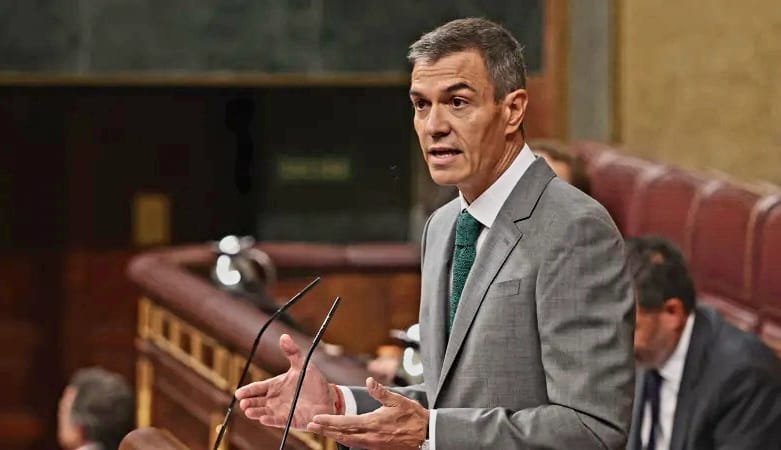
Spain is heading to the polls earlier than expected after Prime Minister Pedro Sánchez called a snap general election for November 29, 2026.
The announcement comes at a difficult moment for Sánchez and his minority government. Public anger over the rising cost of housing has grown across Spain, while his government has struggled to get its housing plans through Parliament.
Sánchez announced the election in a televised address on Monday. He said Spanish voters should now decide what direction the country should take and called for stronger support for a progressive government.
The election was originally expected to take place in 2027.
Housing crisis becomes a political turning point
Housing has become one of the biggest problems facing people in Spain.
Rents have risen sharply in recent years, while many families and younger people are finding it increasingly difficult to afford a home. The issue has also triggered large protests in cities across the country.
The pressure increased after the eviction of an 87-year-old woman in Madrid who had lived in her home for about 70 years. Her case became a powerful symbol of Spain’s housing problems and helped bring thousands of people into the streets.
In response, Sánchez’s government proposed emergency measures designed to give greater protection to renters and reduce pressure in the housing market. But Parliament rejected the measures last week.
The defeated proposals included restrictions on some evictions, stronger protection for renters and measures aimed at limiting property speculation. The government also wanted to tighten rules around some short-term rentals.
The defeat was a major political setback for Sánchez.
Why Sánchez called the election now?
Sánchez’s government has been under pressure for several reasons, including political scandals and the difficulty of passing legislation with a minority in Parliament.
But housing gives the prime minister a political issue that could help his side reconnect with voters.
That is especially important because the Spanish left traditionally has a stronger position on housing and social protection than the political right.
Sánchez is therefore taking a risk.
By calling an election now, he can make housing a central issue of the campaign instead of allowing the debate to focus mainly on immigration, corruption and other problems that have hurt his government.
His message is essentially that voters must choose between a stronger progressive government and a shift toward the political right.
The right currently has the advantage
The election will not be easy for Sánchez. Recent polling has put the conservative People’s Party, or PP, ahead of the Socialists. The right could also need support from Vox, Spain’s far-right party, to form a government.
That makes the November election especially important. If the current trend continues, Spain could see a conservative government supported by Vox. Such an outcome would mark a major political change for one of Europe’s remaining left-leaning national governments.
However, Sánchez has survived several difficult political situations before.
He has remained in power by building complicated alliances with smaller parties, even though his government does not control a majority of seats on its own.
A difficult campaign ahead
The housing crisis is likely to be one of the main issues during the election campaign. For Sánchez, the strategy is clear: turn public anger over expensive housing into support for the left.
But voters will also be deciding how they view the government’s wider record, including corruption allegations, immigration and its ability to pass new laws.
The opposition argues that Spain needs more housing construction rather than tighter controls on the rental market. The government, meanwhile, says stronger rules are needed to protect people who cannot afford increasingly expensive homes.
That disagreement is now heading directly into the election campaign.
For Spanish voters, November 29 will be more than an early election. It will be a vote on how the country should respond to a housing crisis that has become one of Spain’s most urgent political issues.