
Why the Moon Will Turn Red Over Belgium Tonight?
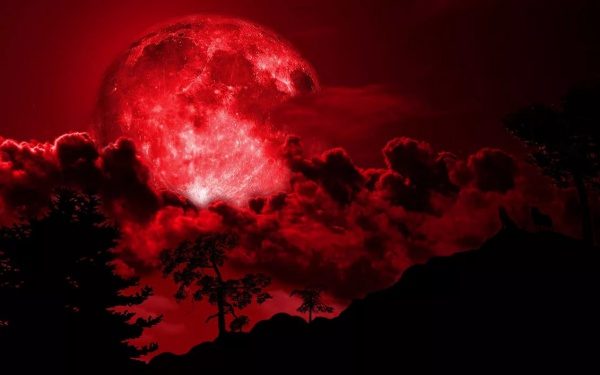
People in Belgium will have the chance to see a rare and impressive lunar eclipse early tomorrow morning, when the Moon is expected to take on a reddish color and become what is commonly known as a “Blood Moon.”
Early risers will be able to watch the lunar eclipse from around 4:30 a.m. Belgian time, while the Moon is expected to reach its full red appearance shortly after 6 a.m., making the early morning hours the most interesting time for people hoping to see the event.
When Does the Red Lunar Eclipse Begin and End?
On Sunday, January 21, 2019, at 3:36 a.m., the Moon will begin moving into the Earth’s shadow, creating the first stage of the partial lunar eclipse, and about an hour later, more of the Moon will enter the Earth’s shadow as the eclipse becomes increasingly visible.
Around 6:12 a.m., the lunar eclipse is expected to reach one of its most impressive stages, with the Moon potentially showing different shades of red depending on the condition and composition of Earth’s atmosphere at the time.
This happens because sunlight passes through Earth’s atmosphere before reaching the Moon, and the atmosphere filters and scatters the light in a way that can make the Moon appear red or orange during a total lunar eclipse.
When Does the Total Lunar Eclipse End?
The total phase of the eclipse is expected to end at around 6:43 a.m., while the entire lunar eclipse will finish at approximately 8:48 a.m., by which time the Moon will have moved completely out of Earth’s shadow.
People who miss this lunar eclipse will have to wait until May 16, 2022, for another total lunar eclipse that could be visible at around 5:50 a.m.
Why Is It Called a Blood Moon?
A total lunar eclipse can only happen when there is a full Moon and the Earth’s main shadow completely covers the Moon, creating the conditions needed for the dramatic change in its appearance.
The eclipse can be observed from many parts of the world where the Moon is above the horizon at the right time, and this particular event is expected to be especially interesting because the Moon will be relatively close to Earth.
The term “Blood Moon” is commonly used to describe a total lunar eclipse because the Moon can briefly appear red, although the exact color can range from a dark reddish shade to a much brighter red depending on the condition of Earth’s atmosphere.
The amount of dust and other particles in the atmosphere can affect the appearance of the Moon, meaning that a higher level of particles can contribute to a deeper red color during the eclipse.
Unlike a solar eclipse, it is safe to look directly at a lunar eclipse with the naked eye, so people do not need special protective equipment to watch the red Moon.
For the best view, however, it is recommended to find a relatively dark location away from bright city lights, because darker surroundings can make the red color much easier to see, while binoculars can also provide a closer look at the Moon during the eclipse.