
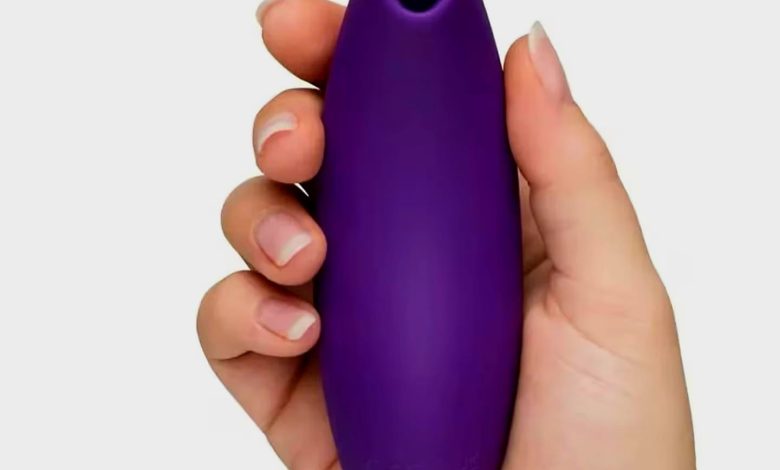
Women in several Dutch prisons are now allowed to purchase sex toys as part of a one-year trial designed to improve well-being, reduce frustration and potentially make prison environments safer.
The unusual policy began in May 2026 at several women’s prison units in the Netherlands. Around 295 female inmates are eligible to take part, representing roughly 70 percent of all women currently held in Dutch prisons.
The Dutch Custodial Institutions Service says the measure is not intended simply as a matter of personal comfort. Officials argue that allowing women to safely address their sexual needs could have broader effects on health, sleep, stress and the overall atmosphere inside prisons.
Two products are available
Under the trial, inmates can choose between two specially approved products. One is a Satisfyer, a device that uses air-pressure technology. The other is a transparent dildo.
The products are deliberately designed in neutral colors and shapes rather than being presented as luxury or entertainment items.
The prison service does not provide the products for free. Inmates who want one must purchase it themselves at cost price.
The products are also subject to hygiene and safety requirements designed specifically for the prison environment.
The policy represents a significant change from the previous situation, in which female prisoners were not permitted to obtain conventional sex toys.
Why did the Dutch government change the rules?
The trial follows research conducted by Leiden University in 2025 into sexuality and well-being among women in prison.
The research suggested that allowing healthy and safe forms of sexual expression could contribute to a healthier and safer environment in women’s prisons.
Researchers also raised concerns about what can happen when approved products are unavailable.
According to medical staff working in the prison system, some inmates may attempt to make their own sexual devices using objects that were never designed for that purpose. That can create hygiene and safety problems.
Medical workers warned that using unsafe homemade alternatives could contribute to health problems, including fungal infections.
The Dutch prison service says that providing controlled and hygienic alternatives could therefore reduce some of those risks.
Officials say it could reduce frustration
The Dutch Custodial Institutions Service says healthy sexuality can have several potential benefits.
According to the service, being able to meet sexual needs in a safe way may help some inmates relax, sleep better and experience less frustration.
Those effects could be particularly relevant in a prison environment, where people live under strict rules, have limited privacy and face significant psychological and social pressures.
The authorities also say the policy could potentially contribute to a safer environment by reducing tensions connected to sexual frustration.
However, the trial is being treated as an experiment rather than a permanent nationwide policy.
Officials want to collect evidence before deciding whether the measure should continue after the first year.
The prison environment creates unique challenges
Sexuality inside prisons can be a complicated issue. Female inmates may have limited privacy and may be separated from partners or family members for long periods. At the same time, prisons have strict rules about what objects inmates are allowed to possess.
For prison authorities, allowing personal items requires careful consideration of security, hygiene and the possibility of misuse. That is why the Dutch trial does not simply allow prisoners to purchase any sex toy they want.
Instead, the authorities have selected specific products and established rules governing their use. The approach is designed to create a balance between personal well-being and prison security.
Could the policy affect sexual behavior?
One of the more unexpected arguments behind the trial is that allowing approved sexual aids could potentially reduce sexual misconduct inside women’s prisons.
The 2025 research suggested that giving inmates safer ways to address their sexual needs could potentially help limit certain forms of inappropriate sexual behavior. That does not mean authorities expect the products to eliminate sexual misconduct.
Instead, the idea is that improving access to safe and private sexual expression could be one factor contributing to a healthier prison environment.
The trial will be important because it gives authorities an opportunity to measure whether those assumptions hold true in practice.
The first evaluation comes after six months
The Netherlands is not immediately committing to making the policy permanent. The first evaluation is scheduled after six months.
Officials will examine how the introduction of the products affects inmates’ well-being and sexuality, as well as social safety inside the prisons.
The evaluation will be particularly important because the policy involves a relatively small group compared with the entire Dutch prison population.
Researchers and prison officials will need to determine whether the reported benefits are significant enough to justify continuing the program.
After one year, the authorities are expected to make a broader assessment of the trial and decide whether it should be extended or changed.
A policy that has attracted attention
The decision has attracted attention because sexual health is rarely discussed openly when it comes to prisons.
Prison policies traditionally focus on security, rehabilitation, education, work and physical health. The Dutch experiment puts another issue on the agenda: whether sexual well-being should also be considered part of a healthy prison environment.
The Dutch authorities are approaching the issue from a practical perspective.
Rather than treating sexual needs as something that should simply be ignored during incarceration, the trial examines whether controlled access to approved products can reduce health risks and frustration without creating new security problems.
At the same time, the policy does not give inmates unlimited freedom over what they can possess. The products must meet specific requirements and are purchased through the prison system.
What happens next?
For now, the policy remains a one-year experiment. Around 295 women have the opportunity to participate, while officials collect information about the consequences of the new rules.
The six-month evaluation will provide the first indication of whether the policy is achieving its intended goals. The final assessment after one year will be even more important.
If officials find that the policy improves well-being, reduces health risks and does not create significant security problems, it could provide a basis for continuing the approach.
If the results are less positive, the Dutch authorities could modify the rules or end the experiment.
For now, the Netherlands is testing an unusual idea: whether giving female prisoners access to safe, regulated sexual-health products can contribute to better health, less frustration and a safer prison environment.
The results of the experiment could influence how prisons approach sexual health and personal well-being in the future.