
Theo Francken Warns of a Difficult Winter for Europe
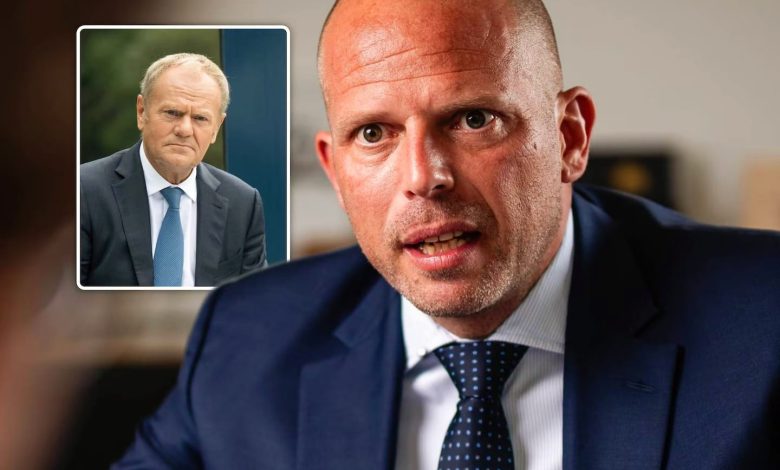
Belgian Defense Minister Theo Francken says Europe should prepare for a particularly difficult winter as concerns grow over possible Russian hybrid attacks against NATO countries.
The warning follows remarks by Polish Prime Minister Donald Tusk, who told Poland’s parliament that intelligence assessments point to a possible Russian plan involving drone and missile attacks against countries supporting Ukraine, including NATO members.
Tusk did not say that an attack was certain or provide details about when one could happen. Instead, he warned that the coming months could bring serious security challenges and urged Poles and their allies to be prepared.
Tusk warns of possible attacks on NATO territory
Speaking in the Polish parliament on September 17, Tusk said the period from late autumn through winter could be particularly difficult.
According to Tusk, intelligence services have identified what he described as a possible Russian strategy targeting Ukraine’s economy and logistics while also putting pressure on countries that support Kyiv.
He said Russia could potentially use drones or missiles against NATO countries on the alliance’s eastern flank.
One of the scenarios described by Tusk is especially concerning: an attack could be presented as an “accident” rather than an intentional military operation.
The Polish prime minister said such incidents could be designed to test NATO’s unity and make member states hesitate before considering a collective response.
Reuters reported that Tusk said the potential attacks could be intended to weaken the willingness of NATO countries to invoke the alliance’s collective-defense provisions.
Tusk also warned that Russia is expected to continue putting heavy pressure on Ukraine during the coming winter, including attacks on infrastructure and logistics.
Why the winter months matter?
The winter period has repeatedly been important in Russia’s war against Ukraine because attacks on energy infrastructure can have a major impact when temperatures fall.
Tusk said Russian forces could increase the intensity of attacks against major Ukrainian cities and target railway infrastructure and supplies needed for Ukraine’s defense.
According to his assessment, Russia’s broader goal would be to damage Ukraine’s ability to function economically and militarily. But Tusk’s warning goes beyond Ukraine.
He said intelligence assessments also indicate a risk of hybrid attacks against countries helping Ukraine, including Poland.
The term “hybrid attack” covers a wide range of activities. It can include cyberattacks, sabotage, disinformation, attacks on critical infrastructure and, in some circumstances, physical attacks involving drones or other weapons.
Theo Francken: Europe must be prepared
Belgian Defense Minister Theo Francken has previously warned that hybrid threats are not limited to traditional military attacks.
In Belgian parliamentary discussions, Francken has described the threat as increasingly diverse, including cyberattacks, attempts to sabotage infrastructure and efforts to create social unrest through social media.
He has also said that critical infrastructure, energy systems, communications networks, financial institutions and defense-related facilities can all become targets. That means a conflict does not necessarily begin with tanks crossing a border.
A cyberattack against a government system, an attempt to disrupt a port, interference with communications or sabotage of important infrastructure could create serious disruption without looking like a conventional act of war.
Belgian defense and intelligence services therefore have a role to play alongside police and other government agencies.
Belgium is watching the wider European threat
Belgium may be geographically farther from the front line than Poland, but it remains part of NATO and is closely involved in European support for Ukraine.
The country also has strategically important infrastructure, including ports, energy facilities, telecommunications networks and transportation links. That makes the broader European discussion about hybrid warfare relevant to Belgium as well.
Francken has previously said that Belgium’s military intelligence service works closely with the State Security Service when dealing with hybrid threats. He has also pointed to increased attention around the North Sea and critical infrastructure.
What would a hybrid attack look like?
The biggest challenge is that hybrid attacks can be difficult to identify immediately.
A cyberattack may initially look like a technical failure. A disruption at a transport facility could be blamed on an accident. A drone incident could be unclear until investigators examine radar data, video footage and other intelligence.
That ambiguity is part of what makes hybrid warfare so difficult for governments. If an incident cannot immediately be attributed to a specific state, governments may face difficult decisions about how to respond.
Tusk specifically warned that Russia could seek to exploit that uncertainty by portraying a potential drone or missile incident as accidental.
Russia has denied accusations of involvement in various acts of sabotage and hybrid activity in Europe.
Why NATO’s unity matters?
NATO’s collective-defense principle is central to the security of its members.
A deliberate armed attack against a NATO member can trigger consultations under Article 5, although the specific response is determined by NATO members and can take different forms.
Tusk’s concern is that repeated incidents that remain below the threshold of an obvious military attack could create confusion and disagreement among NATO countries.
For Poland, the issue is particularly sensitive because the country borders Ukraine and sits on NATO’s eastern flank.
Poland has also become one of the key logistical hubs for Western support to Ukraine.
The warning does not mean an attack is inevitable
Tusk’s remarks should not be interpreted as a prediction that Russia will definitely attack a NATO country this winter.
His comments were based on intelligence assessments and described possible scenarios rather than a confirmed future event. That distinction matters.
European governments regularly prepare for worst-case scenarios even when there is no certainty that those scenarios will happen.
The purpose is to improve readiness, protect critical infrastructure and make sure governments can react quickly if an unexpected incident occurs.
For Belgium, that means the discussion is not simply about what happens on Poland’s border.
It is also about how European countries protect their networks, infrastructure and institutions in an environment where security threats can take many different forms.
A difficult winter for Europe?
Tusk’s warning and Francken’s comments come as European governments continue to strengthen their defenses while the war in Ukraine enters another critical phase.
The immediate concern remains the possibility of intensified Russian attacks against Ukraine.
But the bigger question for NATO is whether the conflict could create new security challenges beyond Ukrainian territory.
For European citizens, hybrid warfare can be far less visible than a conventional war. There may be no warning siren, no battlefield and no clear front line.
Instead, the signs could appear as a cyberattack, a power disruption, a suspicious drone, damage to critical infrastructure or a coordinated disinformation campaign.
That is why officials such as Tusk and Francken are urging governments to remain alert.
The coming months will test not only military preparedness, but also Europe’s ability to protect its infrastructure, maintain public confidence and respond together when the origin of a threat is not immediately clear.