Carrefour Confirms Cyberattack on Belgian Supermarkets
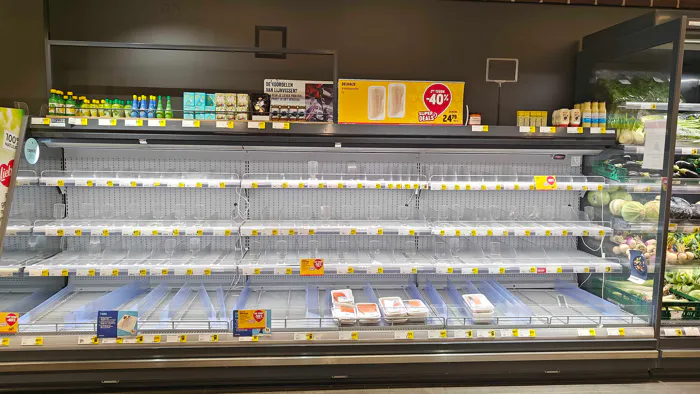
Several supermarket chains in Belgium have been affected by a cyberattack targeting refrigeration systems, disrupting the temperature controls used to keep food fresh and safe.
Carrefour has now confirmed that the incident was caused by a cyberattack. The problems have also been reported in other European countries, including Estonia, while IKEA has reported refrigeration issues at one of its stores in Norway.
The attack has raised concerns about food safety, with some supermarkets forced to check their refrigerators and freezers to determine whether products are still safe to sell.
Carrefour confirms cyberattack at 15 stores
Carrefour Belgium has confirmed that hackers disrupted its refrigeration systems.
According to the supermarket chain, 15 of its approximately 700 stores across Flanders and Wallonia were affected.
The impact has so far been limited to a small number of freezers. All Carrefour stores remain open, and the company says it is monitoring the situation.
Which Belgian supermarkets have been affected?
Several Delhaize and Carrefour locations have reported problems with their refrigeration systems.
The affected stores identified so far include:
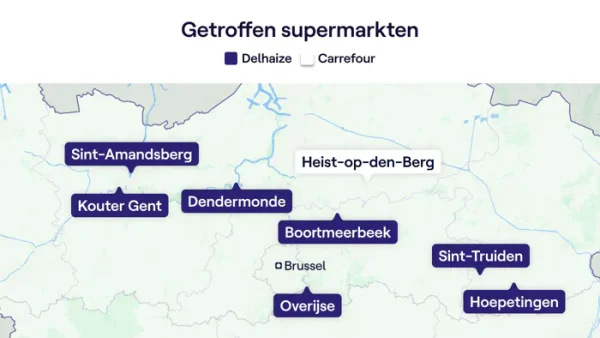
- Delhaize Boortmeerbeek
- Delhaize Sint-Truiden
- Proxy Delhaize Grootzand in Dendermonde
- Proxy Delhaize Sint-Amandsberg
- Proxy Delhaize Hoepertingen
- Proxy Delhaize Kouter in Ghent
- Carrefour Heist-op-den-Berg
According to RTL Info, Proxy Delhaize in Overijse has also been affected.
The situation has caused significant financial losses for some store owners.
At Proxy Delhaize in Hoepertingen, in Limburg, owner Gerte Bouchet estimates that at least 60,000 euros worth of food had to be thrown away.
The temperature inside the freezers reportedly reached 15 degrees Celsius, compared with the normal operating temperature of around -22 degrees.
Food safety checks ordered after the attack
Belgium’s Federal Agency for the Safety of the Food Chain (FASFC) says affected supermarkets must check the temperature of their refrigerators and freezers themselves.
Stores are required to measure the temperature of their products using infrared or probe thermometers.
FASFC spokesperson Hélène Bonte explained that refrigerated food must generally be kept at temperatures no higher than 7 degrees Celsius.
For sensitive products such as fish and meat, the maximum temperature is 5 degrees Celsius. Frozen food must remain at -18 degrees Celsius or below.
If these limits have been exceeded, or if there are doubts about food safety, the affected products must be removed from store shelves and cannot be sold.
IKEA store in Norway also reports problems
The incident has also affected IKEA’s store in Bergen, Norway, where refrigerators and freezers experienced problems following a cyber incident.
IKEA confirmed that the issue was limited to the Bergen location and that no other IKEA stores in Belgium had been affected.
The company is inspecting the refrigeration equipment and products at the Norwegian store. It said customer and employee safety, as well as product quality, remain its main priorities.
The impact on the store’s restaurant and Swedish food shop is reportedly limited.
Refrigeration systems may be vulnerable to remote attacks
Cybersecurity expert Patrick Hauspie from VLAIO, the Flemish government’s business support agency, explained how hackers could potentially disrupt supermarket refrigeration systems.
Many refrigeration systems are managed remotely by external service providers. These companies can access the systems to perform maintenance, install updates and respond to technical problems.
If hackers gain access to an administrator account belonging to one of these service providers, they could potentially interfere with the systems of several customers at the same time.
However, the exact method used in this attack has not yet been confirmed.
Similar incidents reported in Estonia
Estonian media have also reported problems involving supermarket refrigeration systems.
Jann Mutso, CEO of an Estonian refrigeration technology company, told ERR that one of his company’s customers had been attacked.
He described the affected business as a large supermarket chain but did not identify it. He also said that other customers in Estonia had experienced similar problems.
In some cases, hackers reportedly managed to increase refrigerator temperatures to as high as 50 degrees Celsius.
Belgium’s Cybersecurity Centre warns about growing threats
The Centre for Cybersecurity Belgium (CCB) has confirmed that it is aware of the incident but has not provided further details.
The agency also expressed concern about the growing number of cyber incidents, particularly those involving the use of artificial intelligence.
According to the CCB, AI is making it easier for sophisticated attackers to exploit weaknesses in IT systems. The agency says this trend has become increasingly noticeable over the past six months.
The incident highlights how a cyberattack can go beyond computers and digital services, potentially disrupting everyday operations in supermarkets and threatening food safety.