How Moroccan Workers Helped Build Modern Belgium?
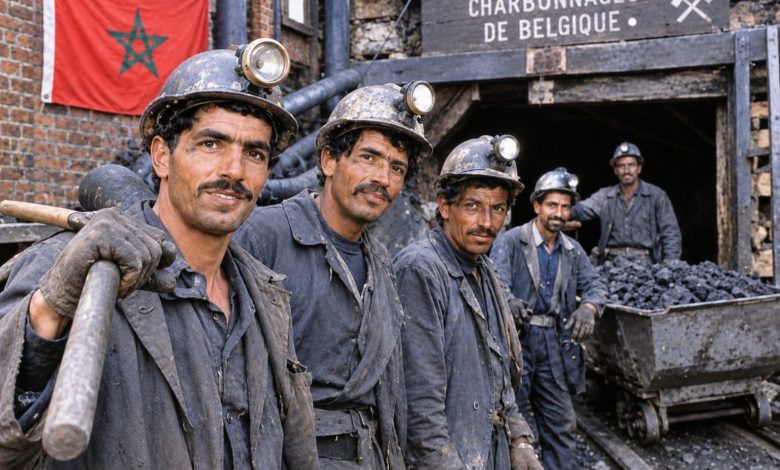
When people talk about Belgium’s industrial history, they often remember the country’s coal mines, factories and steel industry. But behind much of that industrial activity were thousands of foreign workers who came to Belgium looking for jobs and a better future.
Among them were Moroccan men who arrived during the 1960s. Many worked underground in coal mines, while others spent years in factories, construction sites and industrial workshops.
They came from Morocco with the hope of earning a living. Many eventually brought their families, settled permanently and raised children who would grow up as part of Belgian society.
More than 60 years later, their contribution remains an important part of Belgium’s history.
Why Belgium Started Recruiting Workers From Morocco
During the 1950s and 1960s, Belgium was experiencing a serious shortage of industrial workers.
The country’s economy depended heavily on coal, steel, metal production and manufacturing. These industries needed thousands of employees, particularly for difficult and physically demanding jobs that were becoming harder to fill with local workers.
Belgium had already recruited workers from Italy, Spain and Greece. However, the demand for labor remained high, and the country began looking for workers in North Africa.
Morocco became one of Belgium’s important recruitment countries.
On February 18, 1964, Belgium and Morocco signed a bilateral labor agreement that provided a legal framework for Moroccan citizens to come and work in Belgium.
However, Moroccan migration had already started before the agreement. Belgian mining employers had been looking for Moroccan workers since the late 1950s.
The agreement helped organize a migration movement that would change the lives of thousands of families in both countries.
1. Coal Mines: One of Their Hardest Jobs
For many of the first Moroccan workers, the coal mines were their first workplace in Belgium.
Mining companies needed people willing to work underground, where conditions were extremely difficult.
A typical working day could involve:
- Going deep underground through mine shafts.
- Removing coal from underground tunnels.
- Operating or assisting with heavy mining equipment.
- Transporting coal and materials.
- Supporting maintenance and other mining operations.
The work was physically exhausting. Temperatures, dust, noise and the risk of accidents made mining one of the most dangerous industrial occupations.
Workers often spent long hours away from daylight and returned home exhausted.
Many Moroccan men accepted these conditions because the jobs offered an opportunity to earn money and support relatives back home.
Their work helped keep Belgium’s coal industry operating during a period of major industrial demand.
2. Metal Factories and Steel Production
Coal mining was not the only industry that employed Moroccan workers. Many also found jobs in metalworking and manufacturing, particularly in Belgium’s industrial regions.
These workplaces needed employees to handle demanding production tasks, including:
- Working with metal products.
- Operating industrial machinery.
- Moving heavy materials.
- Assisting with steel and metal production.
- Working on factory production lines.
Belgium had a long industrial tradition, particularly in Wallonia, where steel production and metalworking were important sources of employment.
Moroccan workers became part of the workforce supporting these industries.
3. Construction: Building Homes, Roads and Cities
As Belgium continued to develop, construction became another important source of employment.
Moroccan workers found jobs on building sites, where they helped construct residential buildings, commercial properties and other infrastructure.
Their work included:
- Carrying bricks, cement and construction materials.
- Preparing building sites.
- Assisting bricklayers and other skilled workers.
- Working on concrete and masonry.
- Supporting renovation and building projects.
These were physically demanding jobs that often required long hours and hard manual labor. Over time, many workers gained practical experience and developed skills in different construction trades.
Their contribution became part of the wider development of Belgian towns and cities.
4. Textile Factories and Food Processing
Other Moroccan workers found employment in factories outside the traditional mining and steel industries.
Textile production and food processing were among the sectors that employed foreign workers. In textile factories, employees worked with production equipment, fabrics and industrial machinery.
In food processing, workers helped prepare, package and handle products for distribution. These industries depended on large workforces and needed employees who could carry out repetitive production tasks.
The arrival of Moroccan workers helped employers fill vacancies during a period when Belgium’s industries were competing for available labor.
5. Transport and Other Industrial Jobs
As the Moroccan community grew, employment opportunities also expanded into other areas. Some Moroccan workers entered transport-related jobs and other industrial occupations.
Their work became part of the daily operations that connected factories, businesses and communities.
The important point is that Moroccan immigration was not limited to one occupation. Although coal mining played a major role in the early years, Moroccan workers gradually became part of several different sectors of the Belgian economy.
What Were Their Living Conditions Like?
Finding a job in Belgium did not mean that life was easy. Many of the first Moroccan workers arrived without their families. They lived in basic accommodation, sometimes in housing provided or arranged by employers.
In mining areas, some workers lived in shared accommodation and faced difficult living conditions. They also had to adapt to unfamiliar languages, different weather and a society with customs that were very different from those in Morocco.
For many, the biggest challenge was being separated from their families.
Some sent money back to Morocco to support their parents, wives and children. Others hoped to save enough to bring their families to Belgium later. Despite the difficulties, many decided to stay.
From Morocco to Belgium: How Family Life Changed
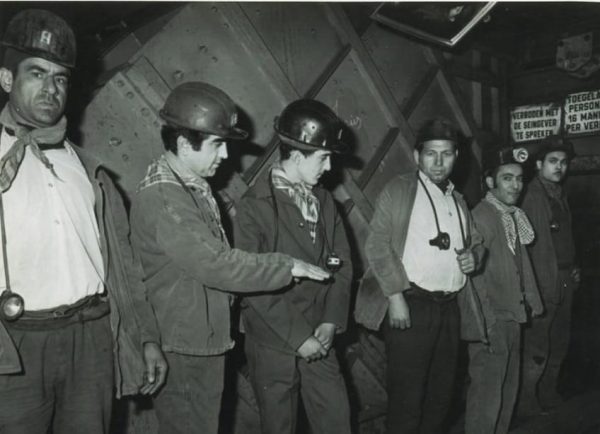
The first generation of Moroccan immigrants was largely made up of young men who had travelled to Belgium for work.
But migration gradually became more permanent. Family reunification allowed wives and children to join workers who had settled in Belgium.
This changed the character of Moroccan migration. What had initially been largely a movement of workers became a process of family settlement.
Children started attending Belgian schools, learning French or Dutch and growing up in Belgian cities. Many were born in Belgium and became Belgian citizens.
The migration story was no longer only about finding work. It became a story about families building their future in a new country.
What Happened When Belgium’s Coal Mines Started Closing?
The coal industry did not remain successful forever. From the 1960s onwards, Belgium’s coal sector faced growing economic difficulties. Mines began closing, and thousands of workers lost their jobs.
Moroccan workers were also affected. Some moved into other industries, including construction, manufacturing and services. Others faced unemployment and financial difficulties.
Belgium stopped official recruitment of foreign workers in 1974, as the economic situation changed.
However, many Moroccan families had already established their lives in the country and did not return to Morocco.
Their children continued their education, entered the labor market and became part of a new generation of Belgian society.
What Do Their Children and Grandchildren Do Today?
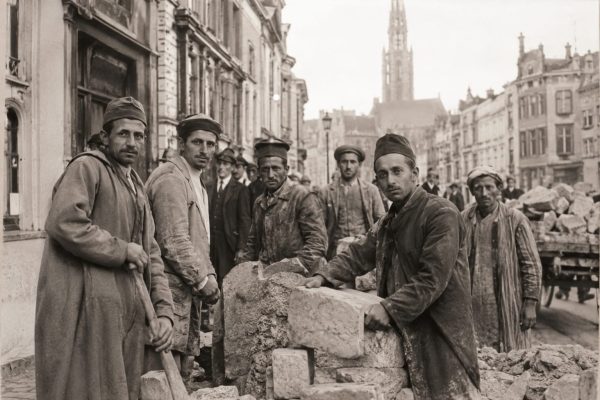
The children and grandchildren of the first Moroccan workers have followed very different professional paths.
Today, people of Moroccan origin work across Belgium in healthcare, education, business, engineering, administration, transport, technology and many other fields.
Some have opened their own companies, while others work in hospitals, schools, universities and public institutions. They are also present in Belgian sports, media, arts and politics.
This is an important part of the story: the contribution of Moroccan families did not end when the mines closed or when the first generation retired.
It continued through their children and grandchildren, who became part of Belgium’s changing economy and society.
How Much Did Moroccan Workers Contribute to Belgium?
It is difficult to calculate the exact economic value of the work carried out by Moroccan immigrants over more than six decades.
However, historical research makes clear that they played an important role in several industries.
They helped fill labor shortages in coal mining, metalworking, textiles, construction and food processing.
Their contribution also extended beyond employment. Families established communities, opened businesses, participated in local life and helped shape the cultural diversity of Belgian cities.
It would be inaccurate to claim that Moroccan workers alone built Belgium. Belgian workers and immigrants from many other countries also played essential roles.
But leaving Moroccan workers out of the country’s industrial history would mean overlooking an important part of Belgium’s development.
A History That Belongs to Belgium
The story of Moroccan workers in Belgium began with difficult jobs, long working hours and the hope of a better future.
Many arrived expecting to work for a few years. Instead, they built families, settled in Belgian towns and helped create a new generation with roots in both countries.
Today, their children and grandchildren are part of Belgium’s workforce, businesses, schools, hospitals and public institutions.
Their history is not simply a story of immigration from Morocco.
It is also a story of the people who helped keep Belgian industries running and whose families became part of the country they helped develop.
More than 60 years after the 1964 agreement, their contribution remains an important chapter in Belgium’s shared history.