Moroccans in Belgium: Population and Main Cities
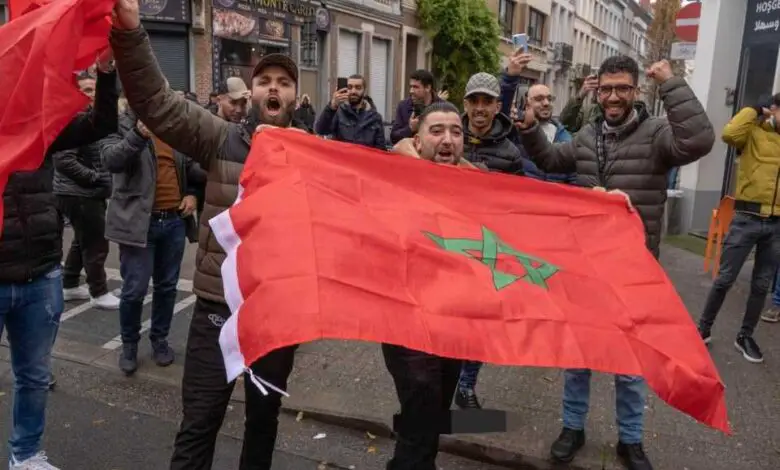
Belgium is home to one of Europe’s long-established Moroccan communities. Over several generations, people of Moroccan origin have settled across the country, contributing to its economy, culture and public life.
The community has grown since the 1960s, when Belgium signed a labour recruitment agreement with Morocco. Today, many people of Moroccan origin are Belgian citizens, meaning that statistics based only on Moroccan nationality do not reflect the community’s full size.
How Many Moroccans Live in Belgium?
More than 700,000 people of Moroccan origin are estimated to live in Belgium, according to Belgium’s Federal Public Service for Foreign Affairs. This estimate was published in October 2024 and remains a useful reference, although it should not be described as an exact official count for 2026.
The figure includes people with Moroccan roots who may have acquired Belgian citizenship, as well as people who retain Moroccan nationality. It is therefore different from the number of Moroccan citizens registered as residents.
Belgium’s statistical office, Statbel, distinguishes between people with Belgian nationality and a Belgian background, Belgian citizens with a foreign background, and non-Belgian residents. This approach helps explain why the number of people of Moroccan origin is considerably broader than the number of Moroccan nationals alone.
Where Do Moroccans Live in Belgium?
People of Moroccan origin live throughout Belgium, with established communities in Brussels and major cities in both Flanders and Wallonia.
Brussels
Brussels is one of the main centres of the Moroccan community. Residents of Moroccan origin live across the capital and its surrounding municipalities, contributing to the city’s cultural, commercial and social life.
Antwerp
Antwerp is another important centre for people of Moroccan origin. The city’s population statistics document Moroccan-origin residents across several districts, including Borgerhout, Deurne and Hoboken. The distribution varies considerably from one district to another.
Liège and Charleroi
Liège and Charleroi also have established Moroccan communities. These cities are among the important urban centres of French-speaking Belgium, where people of Moroccan origin live, work and raise families.
Moroccan-origin residents also live in many other Belgian municipalities. However, the exact population ranking of these cities depends on whether statistics measure nationality, birthplace or family origin.
Where Do Belgian Moroccans Originally Come From?
The Moroccan community in Belgium has diverse regional roots. Many families have connections to northern Morocco, including the Rif region and cities such as Tangier, Tetouan, Nador and Al Hoceima. Other families come from different parts of Morocco.
These regional connections reflect the varied history of migration between the two countries. It would be inaccurate, however, to claim that all or most Belgian Moroccans come from a single region without supporting statistics.
How Did the Moroccan Community Develop in Belgium?
A major milestone came on February 18, 1964, when Belgium signed a labour agreement with Morocco. The agreement helped bring Moroccan workers to Belgium during a period when Belgian industries needed additional labour.
Many workers found jobs in coal mining, textiles, metalworking and other industrial sectors. Over time, family reunification and the settlement of new generations helped transform temporary labour migration into a long-established community.
Today, many Belgians of Moroccan origin were born in Belgium and have grown up within the country’s education system and society.
Moroccan Contributions to Belgian Society
People of Moroccan origin participate in many areas of Belgian life, including business, healthcare, education, culture, sports and politics. Belgian citizens with Moroccan family backgrounds also serve in elected positions at local, regional and federal levels.
As with other communities, individual experiences differ. Some people face challenges involving employment, education, discrimination or access to opportunities, while others have established successful careers and businesses.
The community’s experiences cannot be reduced to a single description, as it includes several generations with different backgrounds, languages and personal histories.
The Moroccan Community in Belgium in 2026
The Moroccan community is an established part of Belgium’s population. An estimate of more than 700,000 people of Moroccan origin provides a broad indication of its size, but it is not a precise 2026 population count.
For an accurate understanding of the community, it is important to distinguish Moroccan nationality from Moroccan origin and to avoid unsupported percentages for individual cities. Together, Belgium’s official population data and the history of migration between the two countries provide a clearer picture of how this community has developed over more than six decades.