Brussels Protest Turns Violent as Police Use Tear Gas and Water Cannon
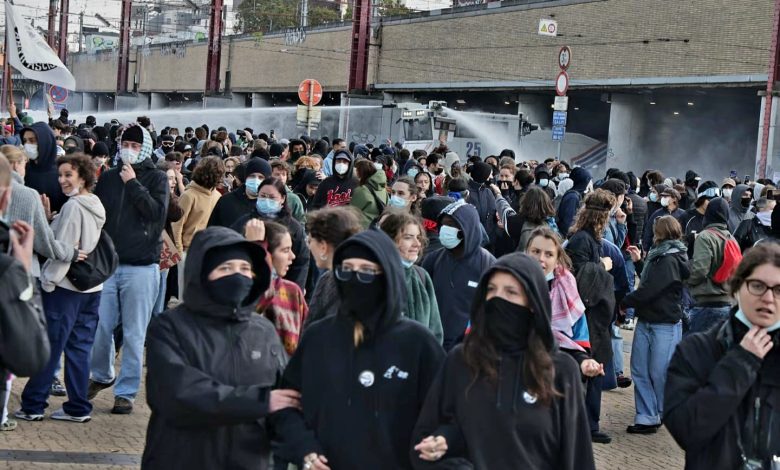
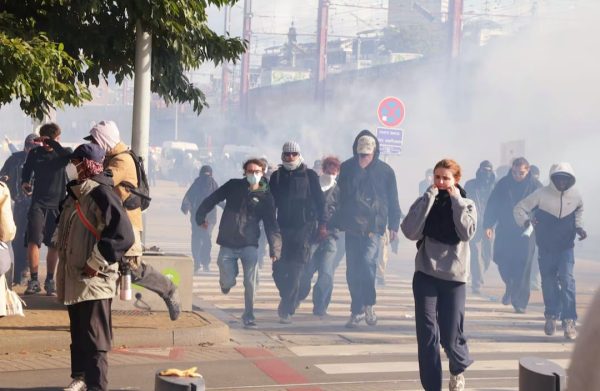
A protest against education cuts and government austerity measures turned violent in Brussels on Saturday, October 17, as police used tear gas and a water cannon to disperse demonstrators near Brussels-South railway station.
Hundreds of young protesters took to the streets, opposing planned cuts to French-speaking education in Belgium, austerity measures introduced by the federal government, and police violence.
The demonstration began peacefully in the morning but escalated around midday after police blocked protesters from moving farther through the city. Several demonstrators were arrested, and multiple entrances to Brussels-South station were temporarily closed.
Police Clash With Protesters Near Brussels-South Station
The protesters gathered at Brussels-Central station at around 10 a.m. before beginning their march shortly before 11 a.m.
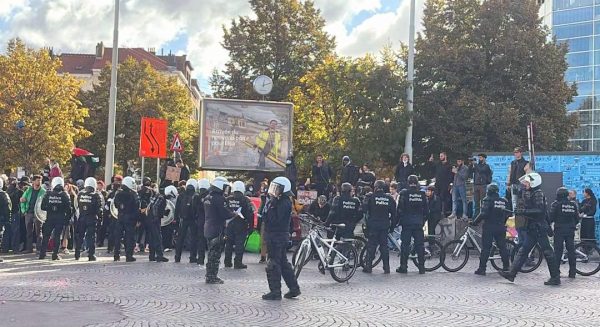
The group first moved toward Place de l’Albertine and then climbed Mont des Arts, a popular public space in central Brussels. Police blocked their path on the steps, briefly raising tensions before the demonstrators turned back.
Some teachers and trade union members were among the protesters. After discussions with police, they received permission to continue toward Brussels-South station, with officers following the group from a distance.
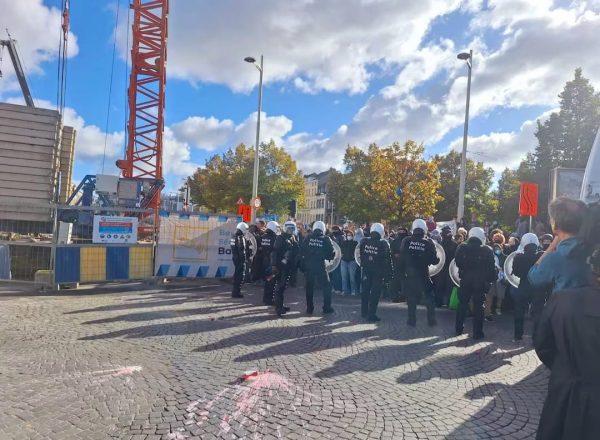
However, once the demonstrators reached the station area, police blocked their way. Officers also stopped the group along Avenue de Stalingrad, known locally as Avenue Jamar in the report’s route description, and prevented protesters from returning toward the city center through Europa Esplanade.
Attempts to reach Place Bara were also blocked.
Tear Gas and Water Cannon Deployed
Tensions escalated at around 12:30 p.m. when some demonstrators reportedly used construction barriers to advance toward police and threw various objects at officers.
Police responded by deploying tear gas and a water cannon, pushing the crowd back toward Brussels-South station.
Several protesters were arrested near Europa Esplanade, close to the station, according to reporters at the scene. A large group later began moving toward Onderwijsstraat, behind Brussels-South station.
Authorities temporarily closed several station entrances as the situation developed.
Why Are Young People Protesting in Belgium?
The demonstrations follow calls from several protest groups for people to take to the streets against planned cuts to French-speaking education, federal government austerity policies and alleged police violence.
French-speaking students have raised concerns about the impact of education budget reductions on schools and young people. Teachers and trade union members have also joined the wider debate over public services, working conditions and social inequality.
The protests come amid broader opposition to the federal government’s policies, with demonstrators arguing that spending cuts could place additional pressure on education and other public services.
No demonstration had received official authorization, according to Brussels Mayor Philippe Close, who addressed the issue on Friday.
Authorities had also ordered shared electric scooter and bicycle providers to remove their vehicles from areas around Brussels-Central and Brussels-South stations ahead of the planned protests, amid concerns about possible disorder.
Protests Also Reported in Other Belgian Cities
Brussels was not the only Belgian city to see demonstrations on Saturday.
Young people also gathered at Liège railway station to protest. The situation there was reported to be calm at the time of the initial reports.
The protesters’ concerns extended beyond education, with participants also raising issues involving working conditions, public services and social inequality.
Protests Continue in France
The unrest in Belgium comes amid continued protests against education cuts in France. French police also used tear gas in Lyon, according to reports.
The demonstrations in both countries reflect growing opposition among some students and young people to budget reductions affecting education and wider government spending policies.
The situation in Brussels remains subject to change as police continue responding to the unrest. Further details about injuries, arrests and possible damage had not been confirmed in the information available at the time of writing.
Belgium Brief will continue to follow developments and report verified updates as more information becomes available.