Are Home Security Cameras Legal in Belgium?
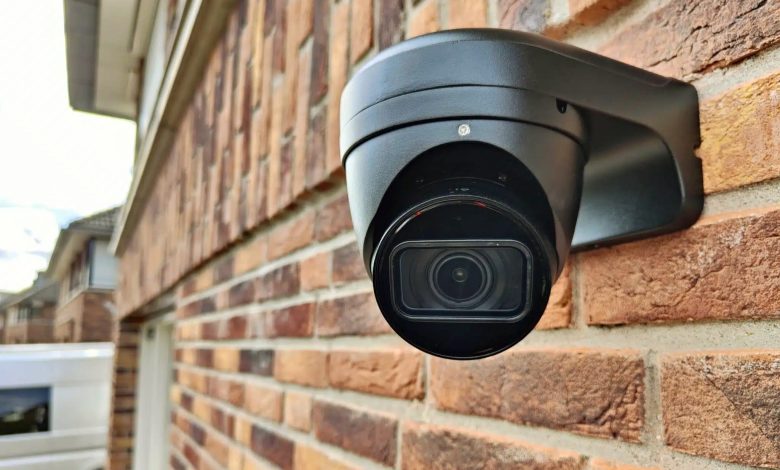
If you live in Belgium and want to install a security camera outside your home, you may be wondering whether it is legal.
The short answer is yes. You can install a security camera at your home, but there are important rules about what the camera can record, how people must be informed and how long recordings can be kept.
The main goal is to protect your property without unnecessarily invading the privacy of your neighbors or people passing by.
Can you put a security camera outside your home in Belgium?
Yes. Belgian law does not generally ban homeowners from installing security cameras.
However, the camera should mainly monitor your own property. You should not deliberately point it at your neighbor’s home, garden or other private property.
You should also avoid recording the public road or sidewalk as much as possible. If a small part of the public area appears in the camera’s view, the recording should be limited to what is strictly necessary.
The Belgian Data Protection Authority says surveillance must be proportionate. In other words, the camera should only capture what is reasonably needed for its purpose.
Do you need a warning sign?
In many cases, yes. Belgian camera rules require people to be informed when a surveillance camera is being used. This is normally done with the official camera surveillance pictogram.
The sign must contain certain required information, including contact information for the person responsible for the camera system.
Hidden surveillance cameras are prohibited under the Belgian Camera Act. People do not necessarily have to see the camera itself, but they must be informed that camera surveillance is taking place.
There is an important exception for private individuals using a camera strictly for personal or household purposes inside their private home. In that situation, the Camera Act’s notification requirements may not apply.
Can the camera film the street?
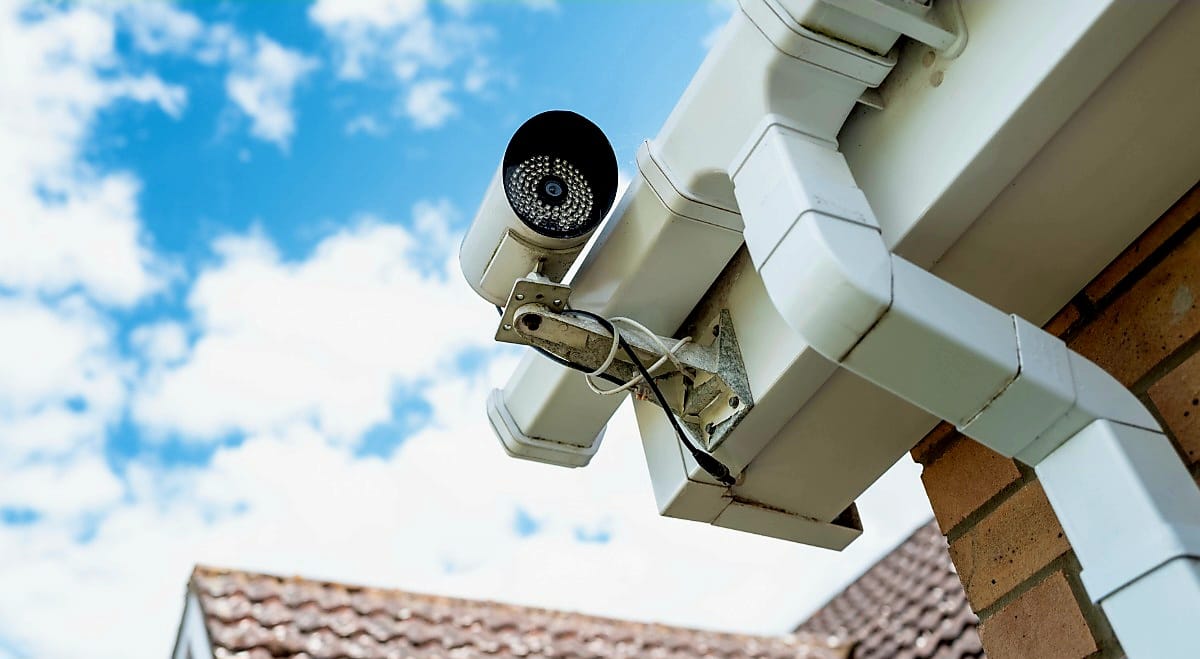
This is one of the most important rules for homeowners. A camera installed at a private home should not be aimed at the public road or at someone else’s property.
The Belgian Data Protection Authority specifically states that cameras in a private, non-public location must not be directed toward places for which the person responsible for the camera does not have the right to process the images. Any recording of the public area should therefore be kept to the strict minimum.
For example, if your camera is installed above your front door, you should adjust its angle so that it focuses on your entrance, driveway or garden rather than covering the entire sidewalk and street.
Many modern cameras also allow you to create privacy zones that block parts of the image. This can be useful when a small part of a neighboring property or public area would otherwise appear in the camera’s view.
How long can you keep security camera recordings?
The general maximum retention period under Belgium’s Camera Act is **one month**, not 28 days.
There are exceptions when the recordings may be useful as evidence of a crime, damage or public disturbance, or when they may help identify a suspect, witness or victim.
Certain locations with particular security risks can also have a longer maximum retention period, in some cases up to three months.
For an ordinary homeowner, this means you should not simply keep every recording indefinitely.
Can you share security camera footage?
Security camera footage should not be treated like ordinary videos that you can freely post online.
If your camera records a crime, the footage may be relevant to the police or other competent authorities. Sharing recordings publicly on social media can create privacy problems, especially when identifiable people appear in the footage.
The safest approach is to keep the recording for a legitimate purpose and provide it to the police when it is relevant to an incident.
People who appear in recorded footage can also have rights regarding access to their images under data protection rules.
What if your neighbor’s camera is filming your property?
If you believe a neighbor’s camera is recording your home, garden or property, it is usually best to first speak with the neighbor and ask how the camera is positioned.
If the camera continues to record areas that it should not, you can contact the police or seek information from the Belgian Data Protection Authority about the appropriate next steps.
The issue can become more serious when a camera deliberately monitors another person’s private property or records more of the public area than is necessary.
Are hidden cameras allowed in Belgium?
No. The Belgian Camera Act prohibits the hidden use of surveillance cameras.
The person being filmed should be informed that camera surveillance is taking place. The law therefore requires the appropriate information to be provided, normally through the official surveillance-camera pictogram.
This is particularly important when a camera is installed inside a home where other people may regularly enter.
For example, if you hire someone to care for your children or work in your home, secretly recording that person can create serious legal and privacy issues.
What about a video doorbell?
A video doorbell is not automatically treated in exactly the same way as a surveillance camera.
If a private individual uses a video doorbell only to identify the person ringing the doorbell, for personal or household purposes, and the system does not record images, the Camera Act may not apply.
However, if the device is used for security surveillance, such as preventing or detecting crimes or disturbances, the Camera Act can apply. This is why the settings and purpose of the device matter.
Why can Belgian cities use cameras on public streets?
Municipalities can use surveillance cameras in public places under specific legal conditions.
A public road is considered an open place under Belgium’s Camera Act. Fixed surveillance cameras in such locations can be installed by public authorities under the conditions set by law.
Municipalities must follow specific procedures, including consultation and notification requirements, and must use the required surveillance-camera sign.
This is why you often see cameras in city centers, public squares and other areas where the municipality is responsible for public safety.
Do private homeowners have to register their camera?
There is an important exception for private individuals. When a person uses a surveillance camera for personal or household purposes in a private home, the specific notification to the police is not required under the Camera Act.
For other surveillance-camera systems covered by the law, notification must generally be made to the police no later than the day before the camera is put into use.
So the rules can be different for a homeowner using a camera for purely private purposes and for a business, organization or other operator.
Having a security camera at your home in Belgium is generally legal. The important thing is how you use it.
Your camera should focus mainly on your own property, avoid recording neighbors and the public road as much as possible, and comply with the information and privacy rules that apply to your situation.
The general maximum storage period is one month, although legal exceptions exist. Hidden surveillance is not allowed, and security footage should not simply be posted publicly online.
If you are unsure whether your camera’s angle or settings comply with Belgian law, changing the camera’s field of view or using privacy-zone features can help reduce unnecessary recording of other people and public areas.