Where Does Belgium Spend Its Tax Money?
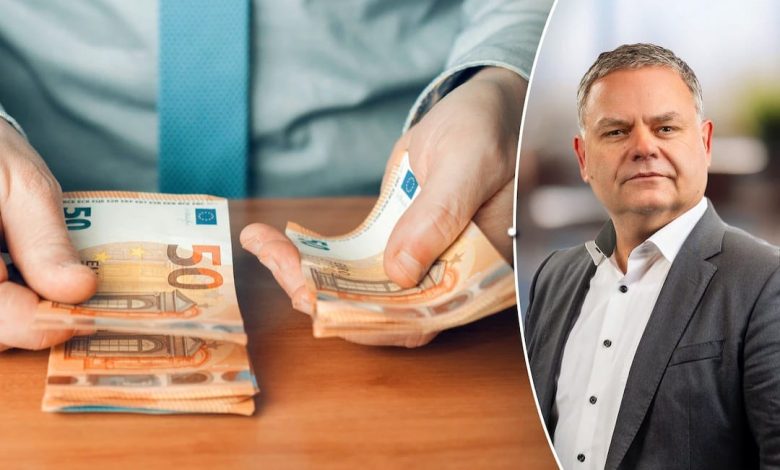
Belgium has one of the highest levels of public spending in Europe, and the amount spent by governments has continued to grow over the years.
But where does all that money actually go?
Older articles often use figures from 2019, when Belgium’s public spending was around 247 billion euro. Those numbers are now outdated.
The latest official figures show that Belgian governments spent the equivalent of 54.2% of the country’s GDP in 2025. With Belgium’s GDP at about 642 billion euro, that represents roughly 348 billion euro in total public spending.
The detailed breakdown by spending category is currently available for 2024. It shows where the largest parts of Belgium’s public budget are going.
Belgium’s public spending is among the highest in Europe
In 2024, total government spending in Belgium was equal to 54.1% of GDP. That was significantly above the European Union average of 49.1%.
The difference is important. Belgium was spending more than half of its economic output through the public sector, while the EU average was just under half.
Belgium’s government spending was also higher than in many other European countries. However, public spending is not the same thing as money collected from income taxes.
Government revenue also includes social-security contributions, other taxes, transfers, property income and payments for government services.
Social protection takes the largest share
The biggest category of government spending in Belgium is social protection. In 2024, Belgium spent the equivalent of 20.4% of GDP on social protection.
Based on Belgium’s 2024 GDP, that represents roughly 126 billion euro. This broad category includes pensions and other social benefits, including support related to sickness, disability, unemployment, families and other social needs.
Pensions are a particularly important part of this spending. Belgium, like many European countries, has an aging population, which puts increasing pressure on pension and social-security spending.
The cost of old-age benefits is therefore one of the biggest long-term challenges for public finances.
Healthcare costs almost 50 billion euro
Healthcare is another major part of Belgium’s public spending. In 2024, government spending on health was equal to 8.0% of GDP.
Using Belgium’s 2024 GDP, that works out to roughly 50 billion euro. This category includes spending connected with hospitals, medical treatment, healthcare services, medicines and medical equipment.
The amount is also continuing to receive close attention from the government.
For 2026, the federal government set the national budget for hospital operating costs at around 11.75 billion euro in December 2025. In September 2026, the government approved a proposal to increase the 2026 hospital operating budget to almost 11.99 billion euro.
Hospital funding is only one part of total healthcare spending, so it should not be confused with Belgium’s entire healthcare budget.
Public administration costs around 44 billion euro
General public services represented 7.1% of GDP in Belgium in 2024. That corresponds to roughly 44 billion euro based on the country’s GDP that year.
This broad category covers more than civil servants’ salaries. It includes the operation of government institutions and various general public services.
It also includes certain public debt transactions and other government functions. This is important because simply describing the entire category as “money spent on civil servants” would give an inaccurate picture.
Education costs around 39 billion euro
Education remains another major area of public spending. Belgium spent the equivalent of 6.3% of GDP on education in 2024. That represents roughly 39 billion euro.
The figure covers government spending across the education system, including schools and higher education.
Belgium’s education spending is relatively high compared with the EU average. Across the European Union, education accounted for 4.8% of GDP in 2024, compared with 6.3% in Belgium.
Economic affairs and public transport
Government spending classified under economic affairs represented 6.4% of Belgium’s GDP in 2024. That is roughly 40 billion euro.
This is a broad category and includes areas such as economic and labor-market policies, transport, energy and other economic activities.
Belgium also recorded the highest level of spending in the EU on general economic, commercial and labor affairs in 2024, at 3.0% of GDP.
This category can include subsidies and labor-market measures, so it is much broader than simply spending on public transport.
Police, justice and public safety
Public order and safety accounted for 1.7% of GDP in Belgium in 2024. That is approximately 10.5 billion euro.
This category includes areas such as police services, courts, prisons and other public-safety functions. It is much smaller than spending on pensions, healthcare or education.
Belgium also spent 1.3% of GDP on defense in 2024, equivalent to roughly 8 billion euro.
What about government debt and interest payments?
Debt costs are another important part of Belgium’s budget. Belgium has accumulated a large public debt, and rising interest rates have increased the cost of servicing that debt.
At the end of 2025, Belgium’s public debt stood at about 692.5 billion euro, equal to 107.9% of GDP.
The government deficit was approximately 33.2 billion euro, or 5.2% of GDP.
The National Bank of Belgium expects the budget deficit to remain high, forecasting a deficit of around 5.3% of GDP in 2026. It also projects public debt to rise to about 111.3% of GDP in 2026.
This means that interest costs are becoming an increasingly important issue for Belgium’s public finances.
Why does Belgium spend so much?
There is no single reason. Belgium has a large social-security system, relatively high spending on pensions and healthcare, several levels of government, and significant public services.
The country’s federal government, regions, communities, provinces and municipalities all have responsibilities and budgets.
Belgium’s complex government structure also means that public spending cannot simply be attributed to one government or one ministry.
Eurostat’s figures combine spending across the general government sector, including different levels of government.
Belgium’s spending has continued to rise
The size of government spending has changed significantly over time. In 2024, total public expenditure was equal to 54.1% of GDP.
In 2025, it increased slightly to 54.2% of GDP. At the same time, government revenue was only 49.0% of GDP in 2025.
The difference between revenue and spending helps explain why Belgium continues to run a large budget deficit.
Where does the money come from?
It is also important to understand where government money comes from. Belgian government revenue is not made up of personal income taxes alone.
It includes:
- Personal and corporate taxes
- VAT and other consumption taxes
- Social-security contributions
- Other taxes and fees
- Property income
- Transfers and other government revenue
- Income from government services and sales
Social-security contributions are particularly important because they help finance pensions, healthcare and other parts of the social-security system.
This is why saying that “taxpayers’ money” directly pays for one specific government service can sometimes be misleading.
The Belgian government operates through a large system of taxes, contributions and transfers.
What does this mean for taxpayers?
For people living and working in Belgium, the high level of public spending is directly connected to the country’s tax and social-security system.
Belgium collects a significant amount of revenue and uses it to finance pensions, healthcare, education, social benefits, public administration, infrastructure and other services.
At the same time, high public spending combined with persistent budget deficits means that Belgium faces pressure to control spending and improve its public finances.
The challenge is particularly important because the country’s public debt is already above 100% of GDP and is expected to rise further in the coming years.
So where does Belgium’s money actually go?
The latest detailed figures give a clear picture.
In 2024, Belgium’s largest government spending categories as a share of GDP were:
- Social protection: 20.4%
- Healthcare: 8.0%
- General public services: 7.1%
- Economic affairs: 6.4%
- Education: 6.3%
- Public order and safety: 1.7%
- Defense: 1.3%
Other spending goes to areas such as environmental protection, housing, culture, recreation and other public services.
The biggest takeaway is that pensions and other social-protection programs account for the largest share of government spending, followed by healthcare.
Belgium spends more than half of its GDP through the public sector.
The latest figures show that total government spending reached about 54.2% of GDP in 2025, or roughly 348 billion euro.
The largest share goes to social protection, which includes pensions and other social benefits. Healthcare, public administration, economic affairs and education are also major spending categories.
At the same time, Belgium continues to run a large budget deficit and has a public debt above 100% of GDP.
These figures explain why government budgets, pensions, healthcare costs and public spending remain major issues in Belgium.
And unlike older articles based on 2019 figures, the latest data shows that Belgium’s public spending remains very high by European standards.