
Phishing in Belgium: Fake Tax Refund Email
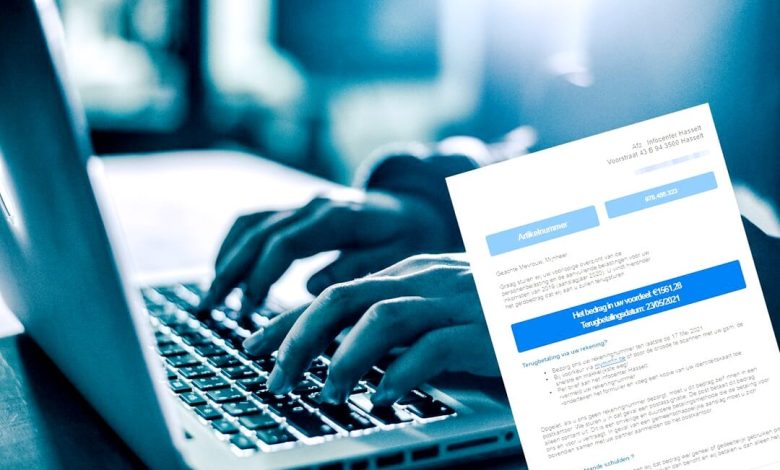
A new phishing email is circulating in Belgium that falsely claims to come from the Belgian Federal Public Service Finance (FOD Financiën or FPS Finance). The message tells recipients that they are entitled to a tax refund of 1,361 euro after a review of their tax file.
The email claims that the refund is related to the 2025 tax year and includes a reference number and a processing date of September 27, 2026. It then asks the recipient to click a button labeled “Confirm my bank details,” claiming that the money will be transferred within 48 to 72 hours.
However, the message is fraudulent and is designed to steal personal and financial information.
How to Recognize the Fake Tax Refund Email?
One of the clearest warning signs is the sender name. The email appears to come from “MyMinfin | FPS Finance,” which can make it look official at first glance.
However, the actual sender address shown in the message is:
[[email protected]](mailto:[email protected])
This is not an official Belgian Finance address. The Belgian Federal Public Service Finance uses official email domains such as minfin.fed.be and news.minfin.fed.be.
Another major warning sign is the link behind the button asking users to confirm their bank details. The link directs recipients to my-minfin.blogspot.com, which is not the official MyMinfin website.
Scammers often use government names, logos, reference numbers and specific amounts of money to make fraudulent emails appear convincing. These details should not be treated as proof that an email is genuine.
What to Do If You Receive the Email?
If you receive this suspicious tax refund message, do not click on the link or button inside the email.
Do not enter your bank account number, card details, passwords, identification information or security codes. You should also avoid replying to the sender.
If you want to check whether you are actually entitled to a tax refund, open your browser and access the official MyMinfin service directly instead of using a link provided in the email.
You can also report suspicious messages through Belgium’s Safeonweb platform.
Check the Sender Before Sharing Your Data
A government logo or the name “MyMinfin” does not prove that an email is legitimate. Fraudsters can easily copy official branding and use information that makes their messages look authentic.
Before providing any personal or banking information, carefully check the complete sender address and the website address behind any link. A familiar-looking display name can hide a completely different email address.
The same applies to links. A website containing words such as “MyMinfin” in its address is not necessarily connected to the Belgian government.
The safest approach is to access government services through their official website or your usual trusted online government portal rather than clicking links in unexpected emails.
The Main Warning Signs
The suspicious message contains several signs that users should take seriously: an unexpected tax refund, a specific amount of 1,361 euro, a request to confirm banking information, a promise of payment within 48 to 72 hours, a sender address that does not belong to the Belgian Finance administration, and a link leading to an unrelated Blogspot domain.
These elements are commonly used in phishing attempts to create urgency and encourage people to provide sensitive information before they have time to verify the message.
If you receive an email claiming that you have a tax refund, take a moment to verify it independently before taking any action. Never rely only on the logo, sender name, reference number or payment amount shown in the message.