
Buying a Home in Belgium in 2027: Why It Is Getting Harder?
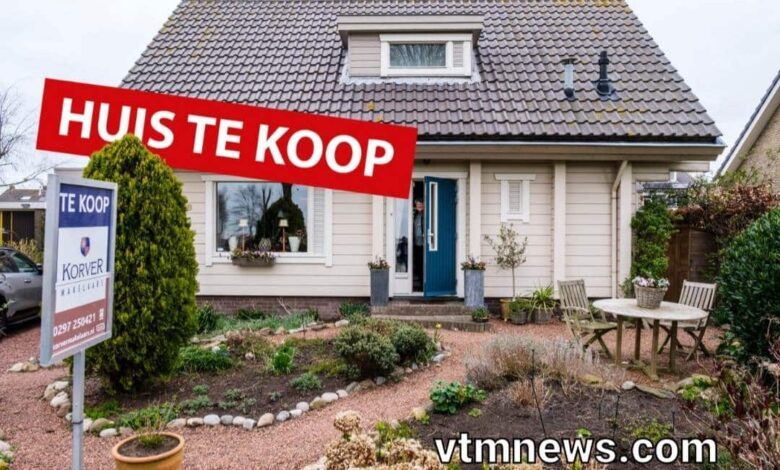
Buying a home in Belgium has become a bigger financial challenge for many households, and 2027 is bringing another change that will affect buyers in Flanders.
After mortgage rates rose sharply in the years following 2020, Belgian homebuyers have had to deal with higher borrowing costs, expensive construction and renovation work, and rising property prices. Now, buyers in Flanders are also facing a higher registration tax when purchasing their only and own home.
From January 1, 2027, the registration tax on an only and own home in Flanders is set to rise from 2% to 3%. That means a buyer purchasing a home for 400,000 euros would pay 12,000 euros in registration tax instead of 8,000 euros, assuming the purchase qualifies for the reduced rate.
The change comes at a time when buying property already requires a significant amount of money upfront.
Why Buying a Home in Belgium Has Become More Difficult?
The affordability problem is not new. In 2023, the National Bank of Belgium reported that housing affordability had fallen to a historically low level. The bank pointed to several factors, including the sharp increase in property prices after 2020 and the rise in mortgage interest rates that began in 2022.
The burden of a new mortgage had already increased from 23.4% of household disposable income at the end of 2019 to 24.7% at the end of 2021. By the third quarter of 2022, it had reached 27.1% as mortgage rates increased. The National Bank said this was close to historically high levels seen in the early 1980s and just before the 2008 financial crisis.
Those figures describe the situation at the time, but the underlying issue remains important: a home is not just about the advertised sale price. Buyers also have to consider mortgage interest, taxes, insurance, notary costs, renovations, energy upgrades and other expenses.
Belgian Home Prices Are Still High
The latest official figures show how much buyers can face depending on where they want to live. According to Statbel, the Belgian median price in the first half of 2026 was 285,000 euros for an attached or semi-detached house and 402,400 euros for a detached house.
Apartments had a lower median price, although prices varied significantly by region. The regional differences are particularly important.
In Wallonia, the median price was 195,000 euros for an attached or semi-detached house and 331,000 euros for a detached house.
In Flanders, the figures were considerably higher: 325,000 euros for an attached or semi-detached house and 449,000 euros for a detached house.
Brussels remained the most expensive region, with a median price of 550,000 euros for an attached or semi-detached house and 1.23 million euros for a detached house.
This means that buyers in Flanders are entering 2027 with property prices that are already well above the Belgian average for many types of homes.
A New Cost for Homebuyers in Flanders in 2027
One of the biggest changes for people planning to buy a home in Flanders is the return of the 3% registration tax.
The Flemish government reduced the registration tax on an only and own home from 3% to 2% from January 1, 2025.
That reduction was intended to make buying a home more affordable. Under the new 2027 budget plans, however, the rate will return to 3%. The Flemish government’s September 2026 statement confirms the increase from 2% to 3%.
The difference may sound small because it is only one percentage point. But on an expensive property, that percentage can represent thousands of euros.
What the 2027 change means?
For example, consider a home priced at 400,000 euros. At 2%, the registration tax would be: 8,000 euros. At 3%, it would be: 12,000 euros. That is an additional 4,000 euros for the buyer.
For a 300,000-euro home, the tax would rise from 6,000 euros to 9,000 euros.
For a 500,000-euro home, it would rise from 10,000 euros to 15,000 euros.
These calculations are based only on the registration tax. They do not include other costs associated with purchasing a property, such as notary and mortgage-related expenses.
Real estate agency ERA has also highlighted the same 400,000-euro example, showing the registration tax increasing from approximately 8,000 euros to 12,000 euros from 2027.
Who Is Affected by the 3% Rate?
The reduced rate concerns the purchase of an only and own home in Flanders and applies only when the buyer meets the required conditions.
The current Flemish rules state that the 2% rate applies to an only and own home when the conditions are met, including requirements concerning the buyer and registration at the property.
The new 3% rate is therefore not simply a general tax on every property transaction in Flanders.
Different rates can apply to other types of property purchases. For example, the standard sales duty in Flanders is currently 12% for purchases that do not qualify for the reduced rate.
Buyers should therefore check their individual situation before calculating the total cost of a purchase.
The Date of the Purchase Agreement Matters
There is also an important transition rule for people who are already planning to buy.
The Flemish Tax Administration stated on October 1, 2026 that private sale agreements concluded before January 1, 2027 can still qualify for the 2% rate, subject to the applicable conditions and proof requirements.
This means that the timing of the sale agreement can matter when determining which rate applies. The Flemish Tax Administration has specifically instructed that evidence may be requested to establish that an agreement was concluded before January 1, 2027.
Anyone close to signing a property deal should therefore discuss the timing and tax treatment with a notary rather than assuming that the date of the final deed will always be the only relevant date.
Flanders Is More Expensive Than Wallonia
The regional price gap is another important part of the Belgian housing story.
The latest Statbel figures show that a typical attached or semi-detached house had a median price of 325,000 euros in Flanders during the first half of 2026, compared with 195,000 euros in Wallonia.
For detached homes, the median was 449,000 euros in Flanders compared with 331,000 euros in Wallonia.
That does not mean every home in Wallonia is cheaper than every home in Flanders. Location, condition, energy performance, land size and access to major cities can make a huge difference. But at the regional level, the gap is clear.
For someone trying to buy a first home, moving from one part of Belgium to another can therefore make a major difference to the purchase budget.
Mortgage Rates Changed the Calculation
Property prices are only one part of the affordability equation. Mortgage rates also matter because even a home with the same purchase price can have a very different monthly payment depending on the interest rate.
This was one of the main issues identified by the National Bank when housing affordability deteriorated after 2020.
When interest rates increase, buyers can either face a higher monthly payment or borrow less money while keeping their monthly payment within their budget.
That can push buyers toward cheaper properties, smaller homes or locations farther from major employment centers.
Higher Construction Costs Add Another Problem
Buying an existing home is not the only challenge. New construction and major renovations have also become more expensive. The National Bank previously highlighted higher construction costs as another factor making home ownership more difficult.
Energy efficiency is particularly important in Belgium. A buyer may find a relatively inexpensive older house, only to discover that the property requires significant work to improve insulation, heating, windows or other energy-related features.
This can turn a seemingly affordable home into a much more expensive project.
What About Home Prices in 2027?
There are not yet final nationwide 2027 house-price figures because 2027 has not happened yet. The best way to look at the 2027 market is therefore to use the latest official 2026 data as the starting point.
Statbel reported that Belgium’s house price index increased by 2.0% year over year in the first quarter of 2026, while the average increase over the previous four quarters was 3.0%. At the same time, the number of real estate transactions fell by 5.4% compared with the first quarter of 2025.
This combination is important. It shows that the Belgian housing market is not simply a story of prices constantly rising at the same speed. Prices, interest rates, household budgets and the number of transactions all interact.
The 2027 Housing Challenge for Buyers
For people planning to buy a home in Belgium in 2027, the biggest issue may be the total amount of money required rather than the property price alone.
A buyer in Flanders could face:
A high purchase price
Mortgage interest costs
Registration tax
Notary and transaction costs
Renovation expenses
Energy-efficiency investments
Insurance and other ownership costs
The return of the 3% registration tax adds another upfront expense for buyers of an eligible only and own home.
On a 400,000-euro property, that change alone represents 4,000 euros more than under the 2% rate.
Buying a Home in Belgium Is Not Impossible, But the Numbers Matter
Belgium remains a country where many households own their homes, but getting onto the property ladder can be difficult for people without significant savings. The situation also varies enormously depending on where you want to live.
Flanders generally has higher house prices than Wallonia, while Brussels remains substantially more expensive for many types of properties.
For buyers planning for 2027, the most important step is to calculate the entire cost of the purchase rather than looking only at the listing price.
A 400,000-euro home, for example, is not simply a 400,000-euro purchase. In Flanders, the registration tax alone would be 12,000 euros at the planned 3% rate for a qualifying purchase from 2027.
That is why the affordability of Belgian housing depends on much more than house prices. Mortgage rates, income, savings, taxes and renovation costs can all determine whether a property fits within a household’s budget.
As Belgium enters 2027, buyers in Flanders will have one more cost to consider: the return of the 3% registration tax on an only and own home.