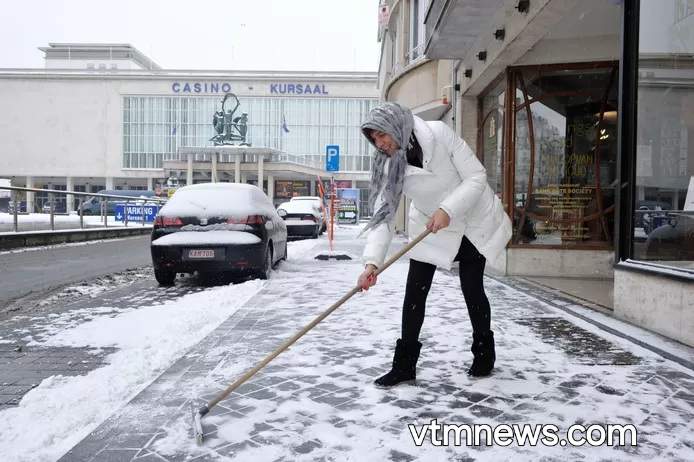
If you live in Belgium, clearing snow and ice from the sidewalk outside your home may be a legal responsibility. During winter, many Belgian municipalities require residents or the people responsible for a building to keep sidewalks safe for pedestrians.
Failing to follow local rules can lead to an administrative fine. If someone slips and gets injured, you could also face legal consequences, depending on the circumstances.
However, the rules are not identical across Belgium. Each municipality can set its own requirements, including who must clear the sidewalk, how much space must be cleared and what penalties apply.
Here is what residents need to know before the next snowfall.
Who Is Responsible for Clearing Snow in Belgium?
In most Belgian municipalities, local police regulations require the sidewalk in front of a property to be cleared of snow and ice.
Depending on the municipality, responsibility may fall on the occupant, tenant, property owner, caretaker or another person responsible for maintaining the building.
For example, the City of Brussels includes property owners, co-owners, tenants and people responsible for daily building maintenance among those who may be required to clear the sidewalk.
If you live in an apartment building, check your building’s internal rules and your municipality’s regulations to determine who is responsible. The obligation does not automatically fall on the person living on the ground floor in every municipality.
How Much of the Sidewalk Must You Clear?
The required width depends on the local rules and the size of the sidewalk.
In the City of Brussels, sidewalks covered with snow or ice must be cleared or made slip-resistant across their full width or two-thirds of their width, with a minimum of 1.5 meters where the sidewalk’s width allows.
Other municipalities may require a different minimum width. For example, some local regulations specify one meter.
The aim is to leave enough room for pedestrians to pass safely, including people using wheelchairs or pushing strollers.
Before winter arrives, check your municipality’s official website for the exact requirements in your area.
When Should You Remove Snow and Ice?
You should clear snow as soon as reasonably possible after it accumulates, following your municipality’s local rules.
Pay particular attention to freezing temperatures, when melting snow can turn into dangerous ice. A sidewalk that initially looks wet may become slippery when temperatures fall.
You do not need to assume that every municipality follows the same cleaning schedule. Rules about timing can differ, so check the regulations that apply to your address.
If snow continues to fall, you may need to clear the sidewalk more than once to keep it reasonably safe.
Where Should You Put the Snow?
Removing snow is only part of the job. You must also make sure the cleared snow does not create another hazard.
Follow these precautions:
- Pile the snow along the edge of the sidewalk where local rules permit.
- Keep drains, gutters and stormwater inlets clear so melting snow can flow away.
- Do not throw snow onto the road or bicycle lane, where it could create dangerous conditions for drivers and cyclists.
- Keep pedestrian crossings and access points clear wherever possible.
- Avoid leaving large piles of snow where they block the path or create visibility problems.
In Brussels, the local regulations specifically prohibit throwing snow onto the roadway and require drains and gutters to remain clear.
Can You Be Fined for Not Clearing Snow?
Yes. If your municipality requires you to clear the sidewalk and you fail to comply, you may face an administrative penalty.
However, there is no single nationwide fine that automatically applies everywhere in Belgium.
For example, the City of Seraing announced in January 2026 that failure to comply with its local snow-clearing requirements could result in an administrative fine of up to 350 euros.
Other municipalities may apply different penalties. The amount depends on the applicable local regulations and the circumstances.
To avoid an unexpected fine, consult your municipality’s official rules rather than relying on a figure reported for another Belgian city.
What Happens If a Pedestrian Slips and Gets Injured?
Failing to clear a slippery sidewalk can create more than a risk of a fine.
If a pedestrian falls and suffers an injury, the person responsible for maintaining the sidewalk could potentially face a civil liability claim. Whether that person is legally responsible depends on the applicable law, the local circumstances and the evidence.
For example, investigators or a court may need to consider whether the sidewalk was dangerously slippery, whether the responsible person failed to take reasonable precautions and whether that failure contributed to the accident.
Clearing snow and reducing ice therefore helps protect pedestrians while also reducing the risk of disputes and potential compensation claims.
What If You Are Unable to Clear the Snow?
Some residents may find snow removal difficult because of age, disability, illness or limited mobility.
If you cannot clear the sidewalk yourself, consider asking a family member, neighbor or building manager for help.
You can also contact your municipality to ask whether it offers assistance or a snow-clearing service. Such services are not automatically available everywhere, so check locally before relying on them.
If you rent an apartment, speak with your landlord or building manager to clarify who is responsible under the applicable local rules and your rental arrangements.
How to Prepare for Snowfall in Belgium?
A few simple steps can help you avoid problems when winter weather arrives.
Keep a snow shovel and suitable de-icing material available before temperatures drop. When snow falls, clear the required section of sidewalk and take extra care when temperatures are expected to fall below freezing.
Use salt or sand where appropriate and permitted by local rules. Follow product instructions and avoid using excessive amounts of de-icing material, which can damage plants and surfaces.
Most importantly, check your municipality’s regulations before winter begins. Requirements can differ even between neighboring towns.
Clearing snow and ice from the sidewalk outside your home is a legal responsibility in many parts of Belgium. Depending on where you live, failing to comply could result in an administrative fine and, in some circumstances, potential liability if someone is injured.
The required cleaning width, the person responsible and the applicable penalty depend on local regulations.
If you live in Belgium, check your municipality’s rules before the next snowfall. A few minutes of preparation can help keep sidewalks safe and prevent avoidable legal and financial problems.