
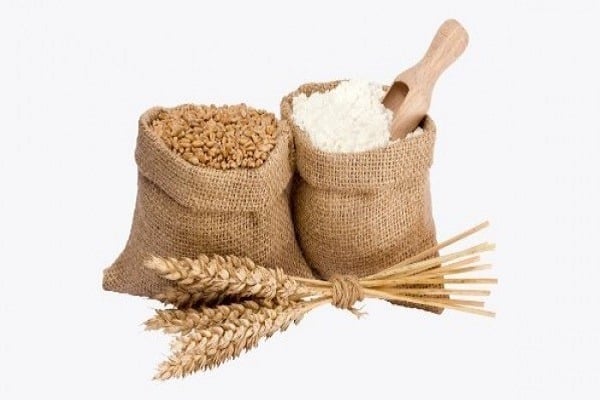
Zakat al-Fitr is a charitable donation that Muslims give at the end of Ramadan, before Eid al-Fitr. It helps people in need prepare for the holiday and ensures that more families can enjoy a meal on Eid.
One common question is how many kilograms of food a Muslim should give for Zakat al-Fitr. The answer depends on the type of food, the traditional measurement used and the Islamic school of thought a person follows.
How Many Kilograms Is Zakat al-Fitr?
Zakat al-Fitr is traditionally measured using a unit called the sa’. It measures volume rather than a fixed weight in kilograms.
Because different foods have different densities, one sa’ of rice does not weigh exactly the same as one sa’ of wheat or dates. As a result, the weight used to calculate Zakat al-Fitr can vary.
Common estimates range from around 2 to 3 kilograms of staple food per person. However, this is a general guide, not a universal measurement accepted by every Islamic authority.
If you plan to give food, check the recommended quantity with a trusted mosque or Islamic organization.
Which Foods Can You Give for Zakat al-Fitr?
Zakat al-Fitr is traditionally given in staple foods that people regularly eat. The specific foods may depend on local customs and the religious guidance being followed.
Common examples include:
- Rice
- Wheat or flour
- Barley
- Dates
- Raisins
- Other accepted staple foods
Rice and wheat are widely used in many Muslim communities. The aim is to provide suitable food that can help eligible recipients prepare for Eid al-Fitr.
Can You Give Rice Instead of Money?
Whether Zakat al-Fitr can be paid in cash is a subject of differing Islamic opinions.
Some scholars permit paying the monetary value of Zakat al-Fitr, while others emphasize giving food. The appropriate method may depend on the Islamic school of thought and the guidance followed by the local mosque or charity.
Muslims should check with a trusted religious authority if they are unsure whether to donate food or money.
How Much Food Does a Family Need to Give?
Zakat al-Fitr is generally calculated for each eligible person rather than as one fixed donation for the entire household.
For example, if a family has four eligible members and follows a guideline of 2.5 kilograms per person, the calculation would be:
4 people × 2.5 kilograms = 10 kilograms of food.
This is an illustrative example, not a universal requirement. The correct quantity depends on the guidance being followed.
The same principle applies to families living in Belgium. They can ask their local mosque or Islamic organization which food quantity or cash amount it recommends for the relevant Ramadan.
When Should You Give Zakat al-Fitr?
Zakat al-Fitr should be arranged in time to help eligible recipients before Eid al-Fitr. Many scholars emphasize that it should reach recipients before the Eid prayer.
There are different opinions about how early it may be paid. Some scholars allow payment earlier during Ramadan, while others recommend paying closer to Eid.
If you donate through a mosque or charity, check its collection deadline to ensure the donation can be distributed on time.
Who Can Receive Zakat al-Fitr?
Zakat al-Fitr is intended to support eligible people in need. Depending on the religious guidance followed, recipients may include people experiencing poverty or financial hardship.
When donating through an organization, check how it distributes the food or money and whether eligible recipients can receive it before Eid.
Zakat al-Fitr in Belgium
Muslims living in Belgium can contact their local mosque or a trusted Islamic organization to confirm the recommended amount of Zakat al-Fitr.
The amount may be announced in euros, while traditional food-based calculations use the sa’ and its equivalent weight. These are different ways of expressing the donation, and the recommended figures may vary between organizations and years.
If you plan to donate rice, wheat or another staple food, confirm the required quantity and whether the organization accepts food donations. If you prefer to pay in cash, check the current recommendation rather than relying on an amount announced in a previous year.
Zakat al-Fitr vs. Zakat al-Mal
Zakat al-Fitr and Zakat al-Mal are two different forms of Islamic charity.
Zakat al-Fitr is associated with the end of Ramadan and is generally calculated for each eligible person.
Zakat al-Mal applies to qualifying wealth when the relevant conditions are met. Its commonly used rate is 2.5% for qualifying assets, subject to the applicable rules.
Paying one does not automatically replace the other.
The amount of food required for Zakat al-Fitr is not universally fixed at one exact number of kilograms. The traditional measurement is the sa’, and its equivalent weight depends on the food and the religious interpretation followed.
For an accurate calculation, consult a trusted Islamic authority. Muslims in Belgium should also check current local guidance before donating, especially if they need to confirm the recommended cash amount or the deadline for payment.