
Brussels Faces Continued Pressure on Asylum Reception
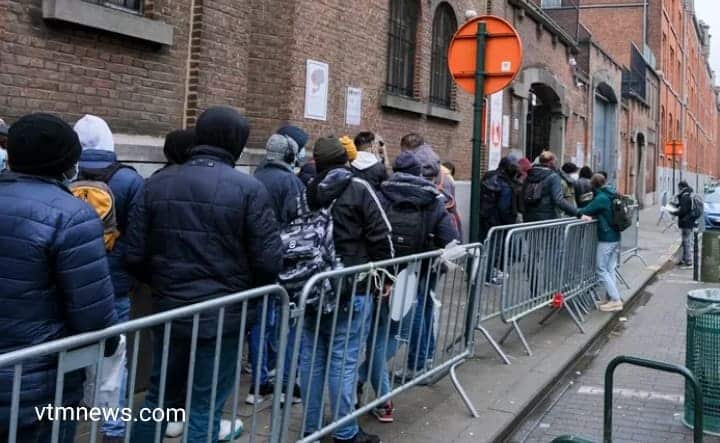
Brussels continues to face pressure over accommodation for asylum seekers, despite a gradual reduction in Belgium’s reception network.
The situation has changed significantly compared with previous winters. Belgium has reduced the use of temporary accommodation, including hotels, while authorities are also closing some emergency reception sites and reorganizing the national reception system.
For people arriving in Brussels and applying for international protection, the Petit-Château, known in Dutch as Klein Kasteeltje, remains an important part of the process.
What Is Happening at Klein Kasteeltje?
The Petit-Château is Belgium’s official arrival center for people applying for international protection.
It is managed by Fedasil, the federal agency responsible for asylum reception. After an asylum application is registered, Fedasil checks whether the person is entitled to reception and, when appropriate, offers a place either at the arrival center or at another reception facility in Belgium.
The center is therefore mainly a starting point in the asylum procedure rather than a permanent accommodation facility.
Fedasil says that people who are entitled to reception may be temporarily accommodated while another suitable place is found.
Belgium Has Reduced Emergency Accommodation
The Belgian government has been gradually reducing temporary reception capacity as the pressure on the reception network has fallen.
In January 2026, the last hotel used to accommodate asylum seekers in Belgium closed. At the beginning of the De Wever government, five hotels in Brussels were still being used, housing around 400 people in total.
The government has said that hotel accommodation was considered a temporary measure rather than a permanent solution.
This marks a major change from the situation during the previous reception crisis, when emergency accommodation was expanded to deal with a shortage of regular places.
The Brussels Deal Is Also Being Reduced
Another major change concerns the Brussels Deal. The agreement was created in 2022 because the regular Fedasil network did not have enough places for asylum seekers.
In 2026, the federal government began reducing the number of places created under the agreement.
According to BRUZZ, the 2,000 places originally created under the Brussels Deal were reduced to 1,000. The first 266 places were deactivated in August 2026, followed by another 734 places in September.
This means that Brussels is still dealing with pressure on accommodation, but the government’s current approach is to reduce temporary capacity rather than expand it indefinitely.
What Happens to People Who Cannot Get a Reception Place?
A lack of reception places can still affect asylum seekers. Fedasil says that when there are not enough places, it may not be able to immediately process a request for accommodation.
Children, women and vulnerable people receive priority. People who are waiting for a reception place can register on a waiting list. They remain entitled to medical assistance and can also seek legal assistance.
Brussels also has emergency shelters for people who urgently need somewhere to stay while waiting for a reception place.
What About the Cold Weather?
Winter weather can make the lack of accommodation much more serious. When temperatures fall, sleeping outdoors becomes a major humanitarian concern, particularly for people who have nowhere else to go.
However, it would be incorrect to say that Brussels has announced a new 100-place emergency rental program for the winter of 2027 unless the city officially announces such a measure.
The earlier 100-place emergency accommodation plan belongs to a previous period of the Belgian reception crisis and should not be presented as a new 2027 policy.
For the latest winter measures, readers should check announcements from the City of Brussels, Fedasil and Brussels emergency shelter services.
New Reception Centers Are Still Being Planned
Although Belgium is reducing some temporary reception capacity, new or replacement reception locations continue to be part of the broader network.
For example, in July 2026, the planned opening of a Fedasil reception center in Uccle was temporarily suspended by a Brussels court.
The former Armonea nursing home was expected to accommodate around 230 asylum seekers, including families with children, single men and women and unaccompanied minors. The planned center was to be managed by Samusocial.
This shows how complicated the reception situation remains. The country is reducing some emergency capacity while authorities and reception partners continue to look for suitable locations.
Military Sites Are Also Being Phased Out
Belgium has also relied on military infrastructure during periods of severe pressure on the asylum reception system.
In March 2026, the federal government announced that several military sites used temporarily for asylum reception would gradually return to military use.
The sites involved have provided almost 4,000 reception places in total. Their closure schedule varies, with some locations scheduled to close by the end of 2026.
The government said that the decline in arrivals should allow the reception network to absorb the reduction in capacity.
What Does This Mean for 2027?
The situation in 2027 will depend on the number of new asylum applications, available reception capacity and government decisions.
At this point, it would be misleading to predict that Brussels will definitely rent a specific number of emergency places because of cold weather.
What is clear is that Belgium is moving away from some of the emergency measures used during the previous reception crisis.
At the same time, the shortage of reception places has not completely disappeared. Fedasil continues to warn that there can be delays when there are not enough places available.
Brussels’ asylum reception system has changed considerably since the previous winter crises.
The Petit-Château remains the main arrival center for people applying for international protection, but it is not designed to provide permanent accommodation for everyone who arrives.
Belgium has closed its remaining asylum reception hotels, reduced parts of the Brussels Deal and started phasing out some temporary reception sites.
However, pressure on the reception system remains an issue, particularly when the number of people seeking protection increases or during periods of severe winter weather.
Any new emergency accommodation measures for winter 2027 should be confirmed by the City of Brussels or federal authorities before being reported as official plans.