
How Long Does It Take to Learn Dutch?
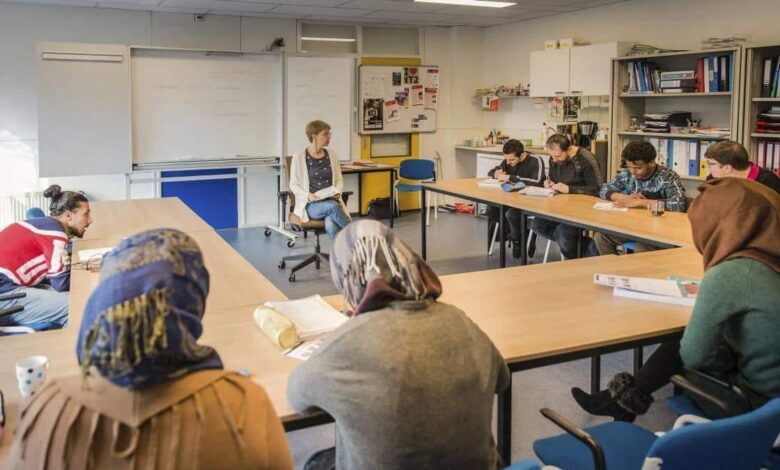
The time needed to learn Dutch is different for every person. Your progress depends on several factors, including your previous experience with languages, your starting level, how much time you spend studying, and how often you use Dutch in everyday life.
In Belgium, people who want to learn Dutch as a second language can choose from different options, including adult education centers, basic education centers, university language centers, and programs connected to VDAB. Depending on your previous knowledge, you may be directed to the course that best matches your level and learning needs.
Previous Language Learning Experience
If you have already learned other languages, you may find it easier to understand how Dutch works and develop new vocabulary and grammar skills. Your previous experience can also help you understand how to study effectively and practice a new language.
People who already speak English or German may notice similarities in some Dutch words and sentence structures, although Dutch still has its own grammar and pronunciation rules.
Your Starting Dutch Level
Your starting level also makes a major difference. Someone who already understands basic Dutch can usually progress faster than someone who is starting from zero.
In Flanders, Dutch as a second language, known as NT2, is offered at different levels. New learners can be assessed and directed to a suitable program based on their previous knowledge and educational background.
How Much Time You Spend Learning Dutch?
Regular practice is one of the most important factors in learning Dutch. Studying for a short time every day can be more useful than studying for several hours only once a week.
Try to combine different activities, such as speaking, reading, listening, writing, and learning new vocabulary. You can also use Dutch during everyday activities instead of relying only on textbooks.
Formal courses can help you follow a clear learning path. For example, current NT2 programs in Flanders are divided into different modules and levels, allowing learners to progress step by step. Some modules include around 60, 80, 90, or 120 hours of instruction, depending on the level and skills being taught.
Living in a Dutch-Speaking Environment
Living in Flanders can give you many opportunities to practice Dutch outside the classroom. Speaking with colleagues, neighbors, friends, and local residents can help you become more comfortable with the language.
The Flemish Government also encourages opportunities for non-Dutch speakers to practice the language in informal situations, including conversation groups, cultural activities, sports, and other activities in Dutch.
This type of daily practice can help you move from simply understanding Dutch to actually using it naturally.
How Many Hours Does It Take to Learn Dutch?
There is no single number of hours that guarantees fluency because learners progress at different speeds. Instead of focusing only on a specific number, it is better to think about your goal.
If your goal is to handle simple everyday conversations, you may need much less time than someone who wants to speak Dutch confidently at work, study at a Dutch-speaking university, or communicate at an advanced level.
For learners in Flanders, the official NT2 system provides structured learning paths rather than one fixed number of hours for everyone. The available programs vary according to the learner’s level and goals.
Is Dutch Easy or Difficult to Learn?
The difficulty of Dutch depends heavily on your language background and previous experience.
If you already speak English, German, or Afrikaans, you may recognize similarities in vocabulary and grammar. This can make some parts of Dutch easier to understand.
However, Dutch also has challenges. Word order, verb forms, articles, pronunciation, and some sounds can take time to master. Many learners also need regular practice before they feel comfortable understanding native speakers in normal conversations.
The good news is that Dutch can be learned successfully with the right approach and regular practice. You do not need to understand everything immediately. Building your skills step by step can make the process much easier.
How Can You Learn Dutch?
There are several effective ways to learn Dutch, and combining different methods can help you make faster progress.
Structured Dutch courses are a good starting point because they provide a clear learning path and allow you to study grammar, vocabulary, reading, writing, listening, and speaking in an organized way. In Flanders, non-Dutch speakers can be guided toward suitable NT2 courses through the relevant integration and civic integration services.
Practical experience is equally important. Try to use Dutch in your daily life by reading Dutch articles, watching Dutch-language programs, listening to podcasts, and following conversations whenever possible.
Speaking is especially important. Find someone you can practice Dutch with, such as a local friend, colleague, conversation partner, or a Dutch language tutor. Regular conversations can help you become more confident and improve your ability to respond naturally.
Reading and writing can also expand your vocabulary. Start with short texts, messages, articles, or simple stories and gradually move to more difficult material. Writing a short diary or a few sentences in Dutch each day can also help you remember new words and sentence structures.
Practice Dutch Every Day
The most important part of learning Dutch is consistency. You do not have to study for many hours every day, but you should try to use the language regularly.
A combination of formal lessons, daily practice, conversations, reading, listening, and writing can help you build your Dutch skills over time. If you need extra support, a Dutch language tutor can give you personalized practice, correct your mistakes, and help you become more confident when speaking Dutch.
Learning Dutch is a process, not a race. The more consistently you practice and use the language in real situations, the more naturally Dutch will become part of your everyday life.